Wintergreen
Gaultheria procumbens
Glossy evergreen leaves and red winter berries that taste like the gum named after them.
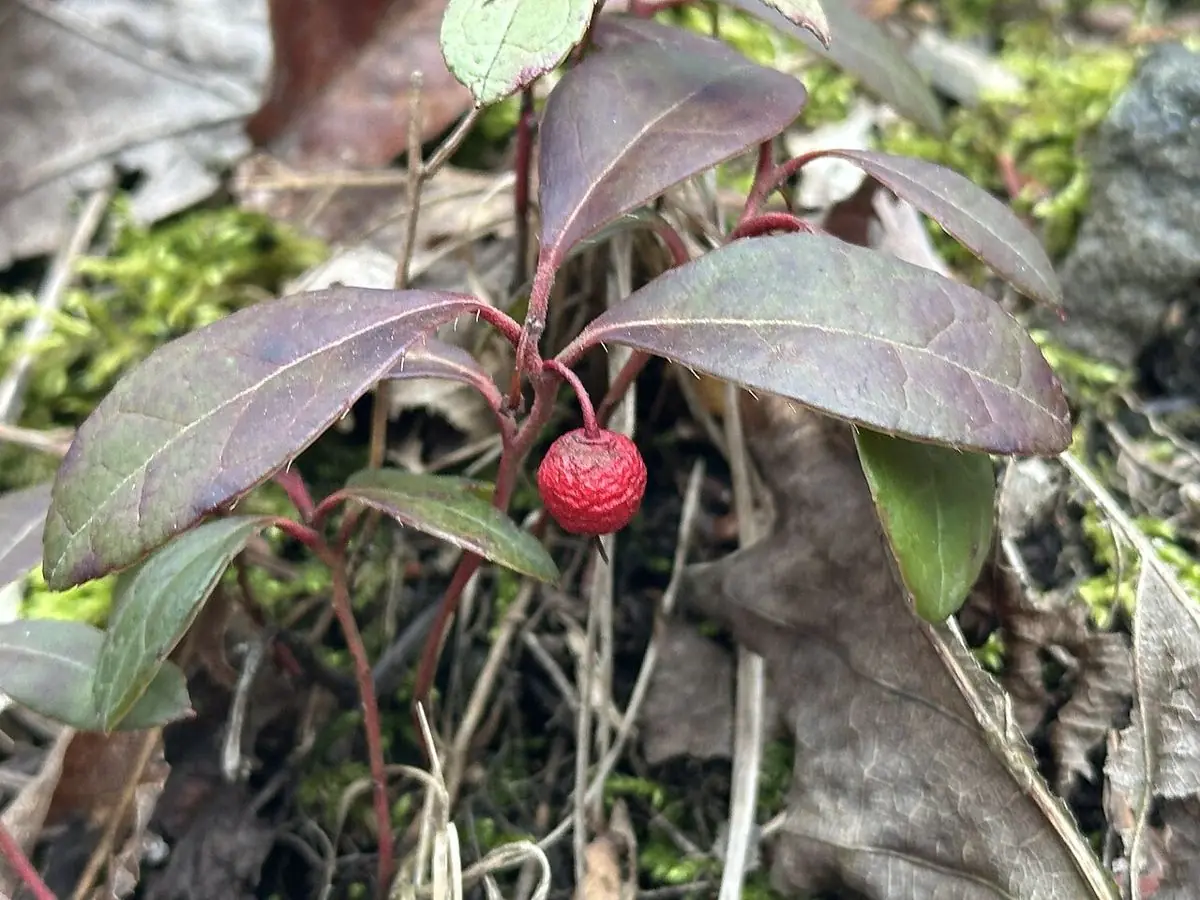
Wintergreen is a low woodland plant that keeps its shiny leaves all winter and holds red berries under the snow. Its minty flavor comes from methyl salicylate, a close relative of aspirin. The Delaware, Mohican, and other eastern nations made a tea of the leaves, and it later flavored root beer, candy, and Teaberry gum.
Traditional profile
Actions
- analgesicEases pain.
- anti-inflammatoryUsed to calm swelling, redness, and heat in tissues.
- counterirritantMildly irritates the skin to draw attention from a deeper ache.
- aromaticRich in fragrant oils, which tend to settle the stomach and clear the head.
Body systems
Native nations kept their own medical knowledge, and much of it was never written down or was recorded by outsiders. The uses on this page are the ones published in ethnobotanical records and credited to the nations named; they aren’t mapped onto Chinese or Ayurvedic systems, which don’t belong to them.
How to know it
A creeping evergreen only three to six inches tall, with leathery, glossy, oval leaves clustered at the top of short stems, small white bell-shaped flowers in summer, and round red berries that last through winter. Crush a leaf and it smells of wintergreen candy.
Partridgeberry, a neighbor in the same woods, has smaller paired leaves and two-eyed red berries with no wintergreen smell.
History & lore
Records credit the Delaware, Mohican, and other nations with a leaf tea for kidney complaints, and Great Lakes and eastern woodland nations with wintergreen poultices for aching joints. Its many folk names include teaberry, checkerberry, boxberry, and mountain tea.
Wintergreen oil was once distilled from the leaves, then more cheaply from sweet birch bark, which contains the same compound; today nearly all of it is made synthetically. Teaberry is still a regional ice cream flavor in Pennsylvania.
Growing it
It needs acidic, humus-rich, well-drained soil and part to full shade, much like blueberries and rhododendrons. It spreads slowly by underground runners and makes a fine evergreen groundcover in woodland gardens. It won’t thrive in alkaline desert soils.
Varieties & companions
Garden selections such as ‘Winter Splendor’ and ‘Very Berry’ are bred for bigger berries. Grow it under oaks and pines with ferns, bunchberry, and blueberries. Salal is a taller western relative with edible dark berries.
Gathering & drying
Pick leaves any time of year, taking a few from each patch. For the best flavor, fill a jar with torn leaves, cover with water, and leave it a few days to ferment slightly, which releases the wintergreen flavor, before gently warming it. Berries can be eaten fresh.
At the hearth
The fermented leaf tea is the classic drink. Crushed leaves in a poultice were used on sore muscles and joints.
In the kitchen
The berries are mild and minty, good fresh or in muffins. The leaves flavor teas and cordials. Don’t cook with wintergreen oil at home; it is far stronger than it seems.
Traditional usage
Leaves as tea and poultice; berries as food. Recorded uses center on joint and muscle pain, headache, kidney complaints, and colds.
Native nations kept their own medical knowledge, and much of it was never written down or was recorded by outsiders. The uses on this page are the ones published in ethnobotanical records and credited to the nations named; they aren’t mapped onto Chinese or Ayurvedic systems, which don’t belong to them.
Chemical constituents
The leaves contain gaultherin, a glycoside that enzymes break down into methyl salicylate when the leaves are crushed or soaked. Methyl salicylate makes up nearly all of distilled wintergreen oil. The leaves also contain tannins and flavonoids.
What the research says
Methyl salicylate is a well-established ingredient in rubs for muscle and joint pain, and works partly as a counterirritant. There is little research on the leaf tea itself.
Wintergreen oil is dangerous to swallow. A single teaspoon contains as much salicylate as many aspirin tablets and has killed children. Keep the oil out of reach, and people allergic to aspirin or taking blood thinners should avoid wintergreen products.
Good to know
The leaf tea is weak and safe in normal amounts; the danger is concentrated oil, including some sold for aromatherapy.
Further reading
- Wikipedia: Gaultheria procumbensNames, range, and recorded uses, with references.
- Go Botany: Eastern spicy-wintergreenIdentification and range from the Native Plant Trust.