Prickly Pear
Opuntia engelmannii & O. ficus-indica
Paddle-shaped cactus with magenta fruit, eaten as nopales and tunas from Sonora to Mexico City.
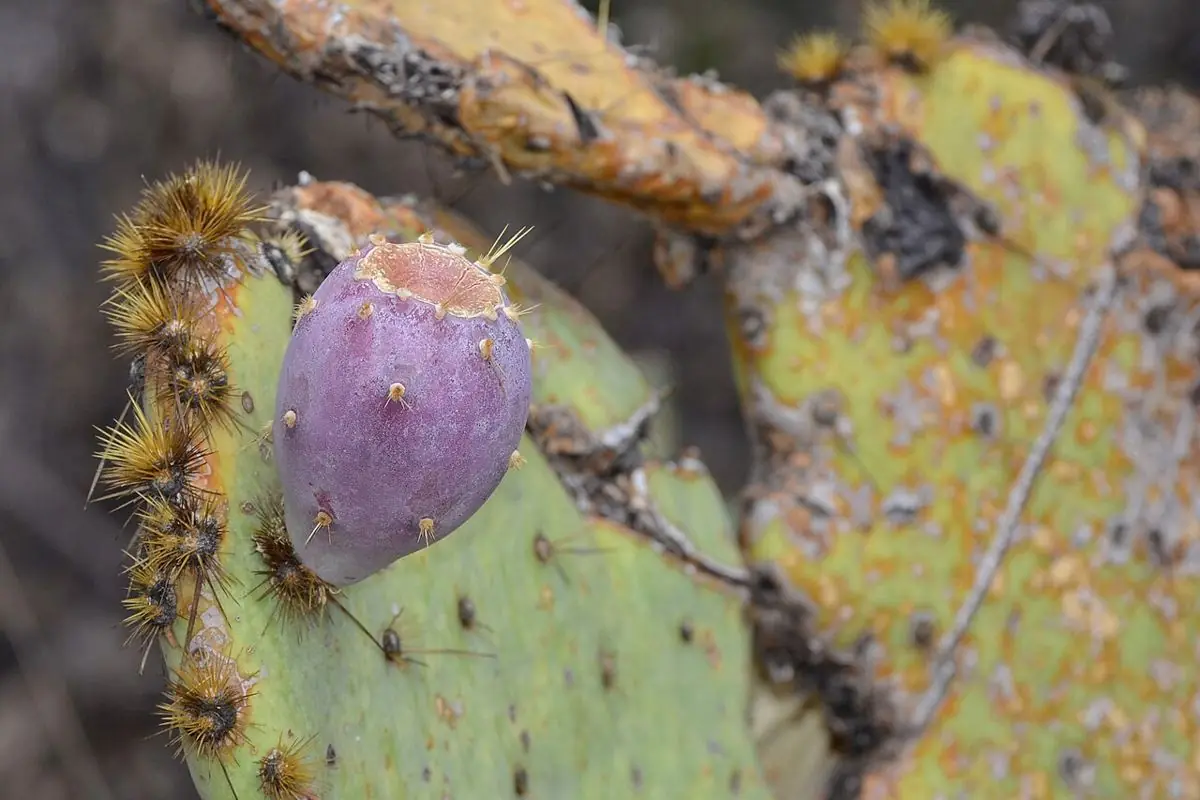
Prickly pear is the cactus on Mexico’s flag and one of the most useful plants in the desert. The young pads, called nopales, are cooked as a vegetable, and the fruit, called tunas, ripens deep magenta after the summer rains. Its juice becomes syrup, jelly, candy, and agua fresca on both sides of the border.
Traditional profile
Actions
- demulcentCoats and soothes irritated tissue with slippery mucilage.
- nutritiveA food-like herb, rich in vitamins or minerals.
- refrigerantCooling; lowers heat and quenches thirst.
Body systems
How to know it
A shrubby cactus made of flat, oval, blue-green pads, dotted with clusters of spines and tiny barbed bristles called glochids. Yellow, cup-shaped flowers open on the pad edges in spring, followed by egg-shaped fruits that ripen to purple-red.
Engelmann’s prickly pear is the native species of southern Arizona grasslands and deserts. The larger, nearly spineless Indian fig (O. ficus-indica) of central Mexico is the one grown commercially for nopales and fruit.
History & lore
Aztec tradition holds that the founders of Tenochtitlan, now Mexico City, were told to settle where they found an eagle perched on a prickly pear, the scene on Mexico’s flag. A tiny scale insect that lives on the pads, cochineal, was crushed by Mesoamerican peoples for a brilliant red dye that became one of colonial Mexico’s richest exports; it still colors foods today.
In southern Arizona the pads of the Mexican nopal came north with Jesuit missions in the 1600s. A Tohono O’odham food expert has noted that his community gathered young pads more than fruit, and that prickly pear jelly is a newer tradition brought by Spanish and Anglo settlers.
Growing it
Plant a pad in spring or summer: let the cut end dry for a week, then set it upright a few inches deep in sandy, fast-draining soil. It needs full sun and very little water once rooted. Native species are hardy through Sierra Vista winters; Indian fig can be damaged by hard freezes.
Varieties & companions
Engelmann’s prickly pear and the purple-tinged Santa Rita prickly pear (O. santa-rita) are native ornamentals. For eating, spineless Indian fig selections are easiest to handle.
Prickly pear shelters quail and lizards and pairs well with agave, desert marigold, and globemallow in a low-water garden.
Gathering & drying
Use tongs and heavy gloves. Harvest young pads in spring while they are thin and bright green, and scrape off the spine clusters. Pick fruit in late summer when it is deep red-purple and comes off with a gentle twist. Burn off the glochids over a flame or scrub them under running water.
At the hearth
The split pad, spines removed, was laid on bruises, sunburn, and insect stings for its cooling gel. The fruit juice is a summer drink.
In the kitchen
Nopalitos, the diced young pads, are boiled or grilled and go into eggs, salads, and tacos; like okra, they are slightly slippery. The fruit is peeled and eaten fresh, or juiced for agua fresca, syrup, jelly, sorbet, and margaritas.
Traditional usage
Pads as food and cooling poultice, fruit as food and drink, flowers occasionally as tea. In Mexican folk medicine nopales have long been eaten by people with diabetes.
Chemical constituents
The fruit gets its color from betalains, the same kind of pigment as beets: red-purple betanin and yellow indicaxanthin. Pads and fruit are rich in mucilage and pectin, fiber, vitamin C, calcium, and magnesium, though some of the calcium in pads is bound up as oxalate.
What the research says
Several small studies, mostly in Mexico, found that eating cooked nopales with a meal lowered the rise in blood sugar afterward. A 2004 trial found that an Indian fig extract taken before drinking reduced some hangover symptoms such as nausea and dry mouth, but not headache. None of this research is large.
Prickly pear as food is safe for most people. Large amounts can cause loose stools, and people on diabetes medicine should watch for low blood sugar if they eat a lot of nopales.
Good to know
Glochids are the real hazard; they are nearly invisible and lodge in skin. The Arizona-Sonora Desert Museum suggests pulling them out with sticky tape or a layer of white glue. Eating lots of fruit can turn urine pink, which is harmless.
Further reading
- Arizona-Sonora Desert Museum: Genus OpuntiaNatural history, food uses, and cochineal.
- Orion Magazine: A Prickly Pear History LessonWhose tradition prickly pear jelly really is.