Wild Bergamot
Monarda fistulosa
Shaggy lavender pompoms with a spicy, oregano-like scent, and a favorite of bees.
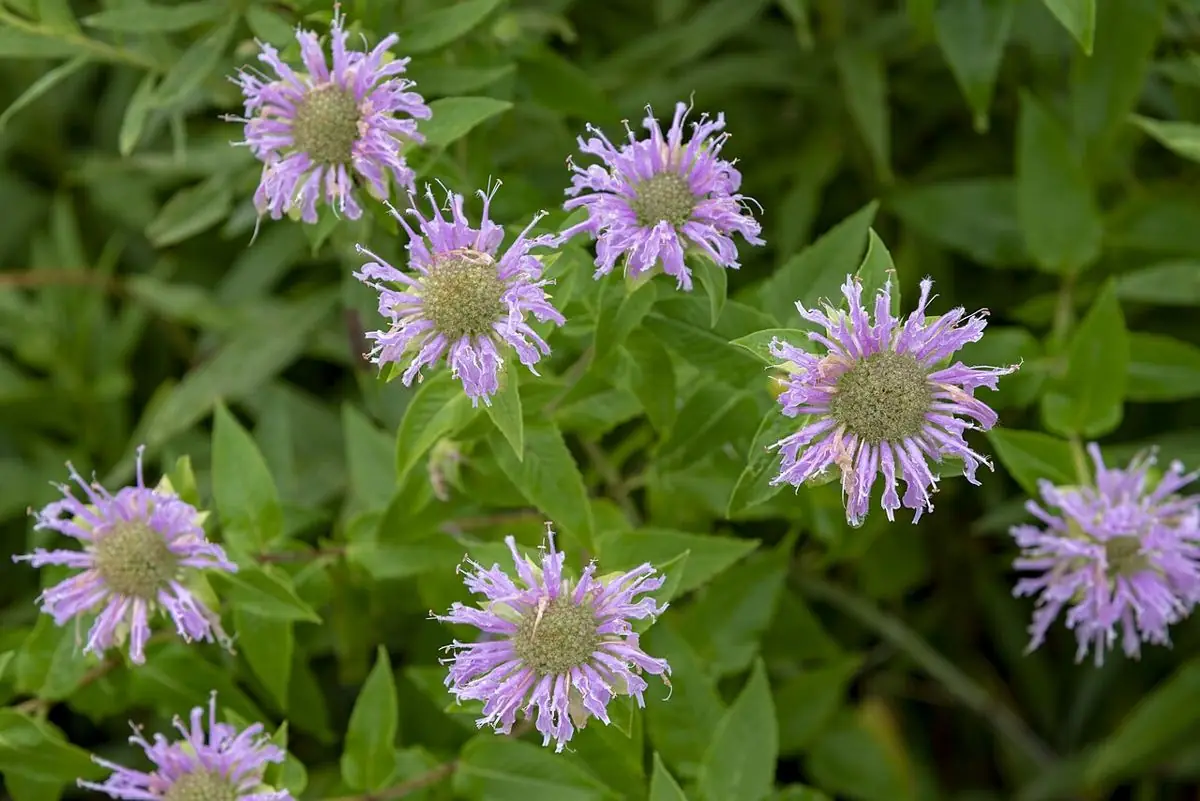
Wild bergamot grows on prairies and open woods from Quebec to Arizona, and its leaves smell like a cross between oregano and thyme. Many nations brewed it as a tea, flavored meat with it, and reached for it when a cold settled in the chest. Its cousin, scarlet bee balm, became “Oswego tea” in colonial kitchens.
Traditional profile
Actions
- diaphoreticBrings on a sweat; used at the start of a cold or fever.
- carminativeEases gas, bloating, and colic.
- aromaticRich in fragrant oils, which tend to settle the stomach and clear the head.
- antimicrobialActs against bacteria, fungi, or other microbes, at least in the lab.
Body systems
Native nations kept their own medical knowledge, and much of it was never written down or was recorded by outsiders. The uses on this page are the ones published in ethnobotanical records and credited to the nations named; they aren’t mapped onto Chinese or Ayurvedic systems, which don’t belong to them.
How to know it
A clumping perennial two to four feet tall with square stems, opposite, toothed, lance-shaped leaves, and ragged pompom flower heads of pale lavender tubes, each sitting on a ring of leafy bracts. Crush a leaf and it smells strongly of oregano and thyme.
Scarlet bee balm (M. didyma) has red flowers and a sweeter, citrusy scent and grows in wetter, eastern woods. Spotted beebalm and lemon beebalm are other wild relatives.
History & lore
The genus is named for Nicolás Monardes, a Spanish physician who wrote one of the first European books on New World plants in 1571. “Bergamot” comes from the scent’s resemblance to the bergamot orange, the fruit that flavors Earl Grey tea.
USDA records credit many nations with its use. The Lakota name it heȟáka tȟapȟéžuta (elk medicine) and made a refreshing tea from the leaves. Tewa cooks boiled it with meat for flavor, and the Iroquois used it for a beverage. The Ojibwe, Menominee, Meskwaki, and Winnebago used it for colds and catarrh, the Blackfoot for stomach pain and skin blemishes, and the Cherokee in warm poultices for headache.
Oswego tea, made from scarlet bee balm, is said to have been learned from the Oswego people of New York and drunk by colonists who gave up British tea after the Boston Tea Party.
Growing it
Easy in sun and average, well-drained soil, and drought tolerant once established. It spreads by short runners into a broad clump; divide it every few years to keep the middle from dying out. Good air flow helps prevent the powdery mildew that bee balms are prone to in humid summers.
Varieties & companions
Straight wild bergamot is the best for tea. Mildew-resistant garden selections include ‘Claire Grace’ and the dwarf ‘Peter’s Purple’; red, pink, and purple bee balms such as ‘Jacob Cline’ are mostly M. didyma hybrids. In the Southwest, the native mintleaf beebalm (M. menthifolia), sold as “oregano de la sierra,” is used the same way.
It is one of the best plants for native bees, bumblebees, and hummingbird moths. Grow it with coneflowers, mountain mint, and goldenrod.
Gathering & drying
Cut the leafy stems when the plant starts to bloom, on a dry morning. Hang small bundles in the shade, then strip leaves and flowers into a jar. The flowers dry to a pretty lilac and add color to tea blends.
At the hearth
A hot infusion of the leaves is the traditional drink for a cold with a stuffy head. Crushed leaves and flowers make a strong-smelling steam, and a cooled infusion has been used as a wash for skin.
In the kitchen
Use the leaves wherever you would use oregano or thyme: with beans, venison, and other game, tomatoes, and stuffing. The flowers are edible and spicy in salads. Dried and rubbed, it makes a good wild oregano for pizza and chili.
Traditional usage
Leaves and flowering tops, used fresh or dried, as a tea, a steam, a poultice, or a seasoning. Recorded uses cluster around colds, sinus and chest congestion, headache, fever, stomach pain, and skin blemishes.
Native nations kept their own medical knowledge, and much of it was never written down or was recorded by outsiders. The uses on this page are the ones published in ethnobotanical records and credited to the nations named; they aren’t mapped onto Chinese or Ayurvedic systems, which don’t belong to them.
Chemical constituents
Wild bergamot’s oil is dominated by thymol and carvacrol, the same compounds that give thyme and oregano their flavor, along with p-cymene and γ-terpinene. Populations vary, and some plants lean toward geraniol, which smells rosier. The leaves also contain rosmarinic acid and flavonoids.
What the research says
There are almost no human studies of wild bergamot. Lab studies show its oil is strongly antimicrobial, which is what you would expect from its thymol and carvacrol, but that doesn’t tell us how the tea works in people.
As a culinary and tea herb it is generally considered safe. The concentrated oil is irritating to skin and shouldn’t be used undiluted.
Good to know
Powdery mildew on the leaves in late summer is cosmetic; cut the plant back after flowering and it will regrow clean leaves.
Further reading
- USDA NRCS Plant Guide: Wild bergamotRange, growing, and recorded uses by named nations.
- Linda S. Black Elk, Culturally Important Plants of the Lakota (Sitting Bull College, 1998)Lakota names and recorded uses.
- Lady Bird Johnson Wildflower Center: Monarda fistulosaGrowing information.