Staghorn Sumac
Rhus typhina
Fuzzy red cones of sour berries, steeped cold into a pink “lemonade” across the continent.
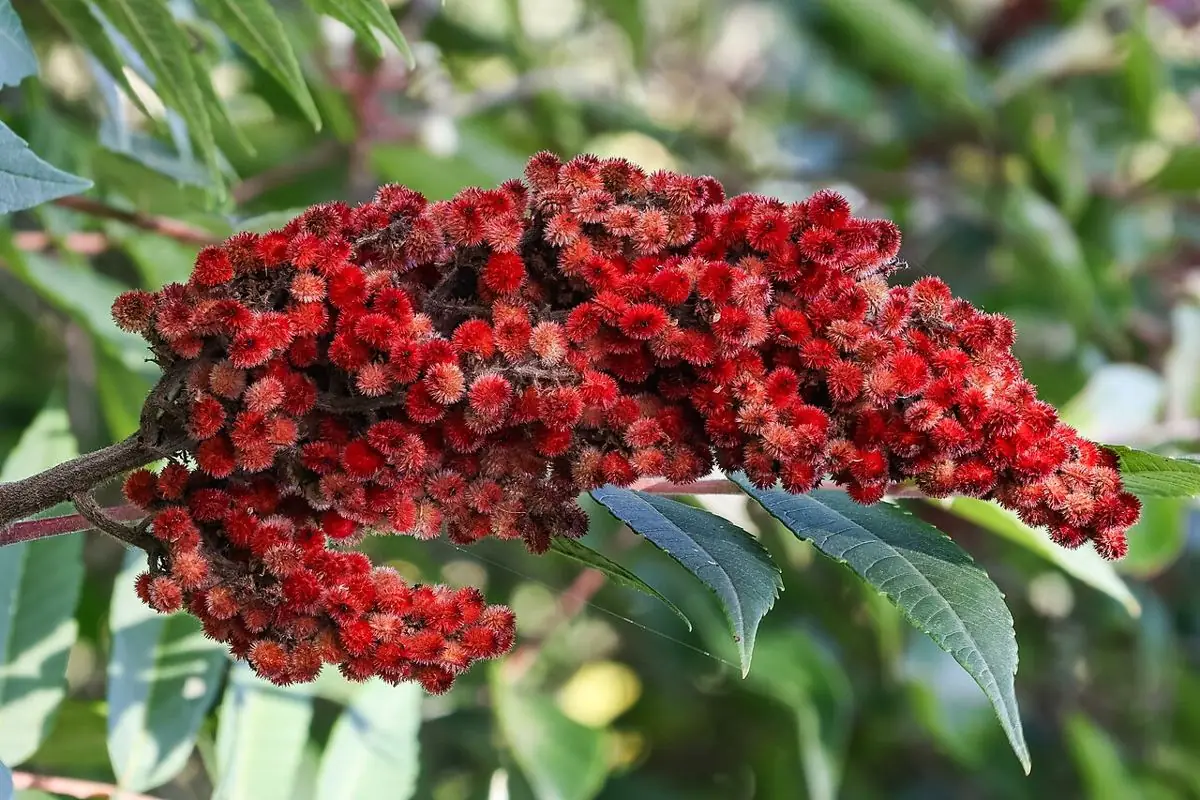
Staghorn sumac grows in thickets along roadsides and field edges, its velvety branches forked like a deer’s antlers. In late summer it holds up upright cones of fuzzy crimson berries coated with a sour, tart dust. Algonquin, Menominee, Ojibwe, Lakota, and many other peoples soaked them in water for a pink drink that tastes remarkably like lemonade.
Traditional profile
Actions
- astringentTightens and dries tissue; the puckery feel of strong tea, from tannins.
- refrigerantCooling; lowers heat and quenches thirst.
- antioxidantRich in compounds that protect cells from oxidative damage.
Body systems
Native nations kept their own medical knowledge, and much of it was never written down or was recorded by outsiders. The uses on this page are the ones published in ethnobotanical records and credited to the nations named; they aren’t mapped onto Chinese or Ayurvedic systems, which don’t belong to them.
How to know it
A shrub or small tree, often in clonal thickets, with thick, velvety young branches (like antlers “in velvet”), long compound leaves of 11 to 31 toothed leaflets, and brilliant red fall color. The fruit clusters are upright, cone-shaped, and densely hairy, dark red when ripe.
Smooth sumac (R. glabra) has hairless branches and is used the same way. Poison sumac (Toxicodendron vernix) is a different plant of swamps and wet ground, with smooth-edged leaflets and drooping clusters of whitish berries. If the berries are red and upright, it isn’t poison sumac.
History & lore
Sumacs were used across nearly all of North America. Records credit the Algonquin, Menominee, and Ojibwe with steeping the berries in sweetened water for a drink, and Dakota and Ojibwe people still gather them for drinks and seasoning. The Lakota name smooth sumac čhaŋzí and mixed its leaves into smoking blends; its berries made a tea “reminiscent of lemonade.”
The same genus gives the dark red sumac spice of the Middle East (R. coriaria), used in za’atar and fattoush. The leaves and bark of American sumacs are rich in tannin and were used to tan leather and make dyes.
Growing it
Very easy in sun and poor, dry soil, and fast growing. It spreads by root suckers into a colony, so give it a corner or a hillside where that’s welcome. Only female plants make berries.
Varieties & companions
‘Tiger Eyes’ is a smaller, golden-leaved staghorn sumac for gardens; ‘Dissecta’ has lacy leaves. Skunkbush or three-leaf sumac (R. trilobata) of the West has smaller, sticky red berries that were used the same way, and lemonade berry (R. integrifolia) grows in southern California.
Sumac thickets feed birds through winter and shelter wildlife. It pairs well with other tough natives such as goldenrod and asters on a dry slope.
Gathering & drying
Pick clusters in mid to late summer, when they are deep red and taste sour when you lick a finger touched to them. Gather after a few dry days, because rain washes the sour coating away. Break the clusters into pieces and dry them in a warm, airy spot, or use them fresh.
At the hearth
The cold-steeped drink is the main household use. A tea of the berries was also used as a gargle for sore throats, and the dried berries were added to smoking mixtures.
In the kitchen
Rub dried berries through a sieve to get a tart red powder for seasoning fish, eggs, rice, and roasted vegetables, much like the Middle Eastern spice. For a drink, steep the berries in cold water; hot water pulls out tannins and makes it bitter.
Traditional usage
Berries were used as a drink, seasoning, and gargle; leaves in smoking mixtures and tanning; bark and roots in teas for diarrhea, fever, and sore throat. Records mention sore throats, colds, stomach complaints, and mouth sores most often.
Native nations kept their own medical knowledge, and much of it was never written down or was recorded by outsiders. The uses on this page are the ones published in ethnobotanical records and credited to the nations named; they aren’t mapped onto Chinese or Ayurvedic systems, which don’t belong to them.
Chemical constituents
The sour taste comes mostly from malic acid, the same acid in tart apples, on the hairs of the berries. The berries also contain anthocyanins that give the red color, plus flavonoids and gallotannins. The leaves and bark are especially high in tannins, which is why they were used for tanning.
What the research says
There is little human research on staghorn sumac. Lab studies of sumac berries, mostly the Middle Eastern species, show strong antioxidant activity, and a few small trials of the spice have looked at blood sugar and cholesterol with mixed results.
Sumac is in the same family as cashews and mangoes. People with a severe cashew or mango allergy should be cautious.
Good to know
Strain sumac drinks through a cloth to catch the fine hairs, which are scratchy in the throat. Harvest respectfully: many Dakota and Ojibwe gatherers offer tobacco before picking.
Further reading
- USDA Forest Service: Staghorn sumacRange and description.
- NATIFS: Staghorn sumacIndigenous food uses from the North American Traditional Indigenous Food Systems nonprofit.
- Washington College: Staghorn sumacUses by named nations and how to tell it from poison sumac.
- Linda S. Black Elk, Culturally Important Plants of the Lakota (Sitting Bull College, 1998)Lakota names and recorded uses.