Wild Rose Hips
Rosa woodsii, R. arkansana & kin
Scarlet fruit left on wild roses after the petals fall, and one of the richest wild sources of vitamin C.
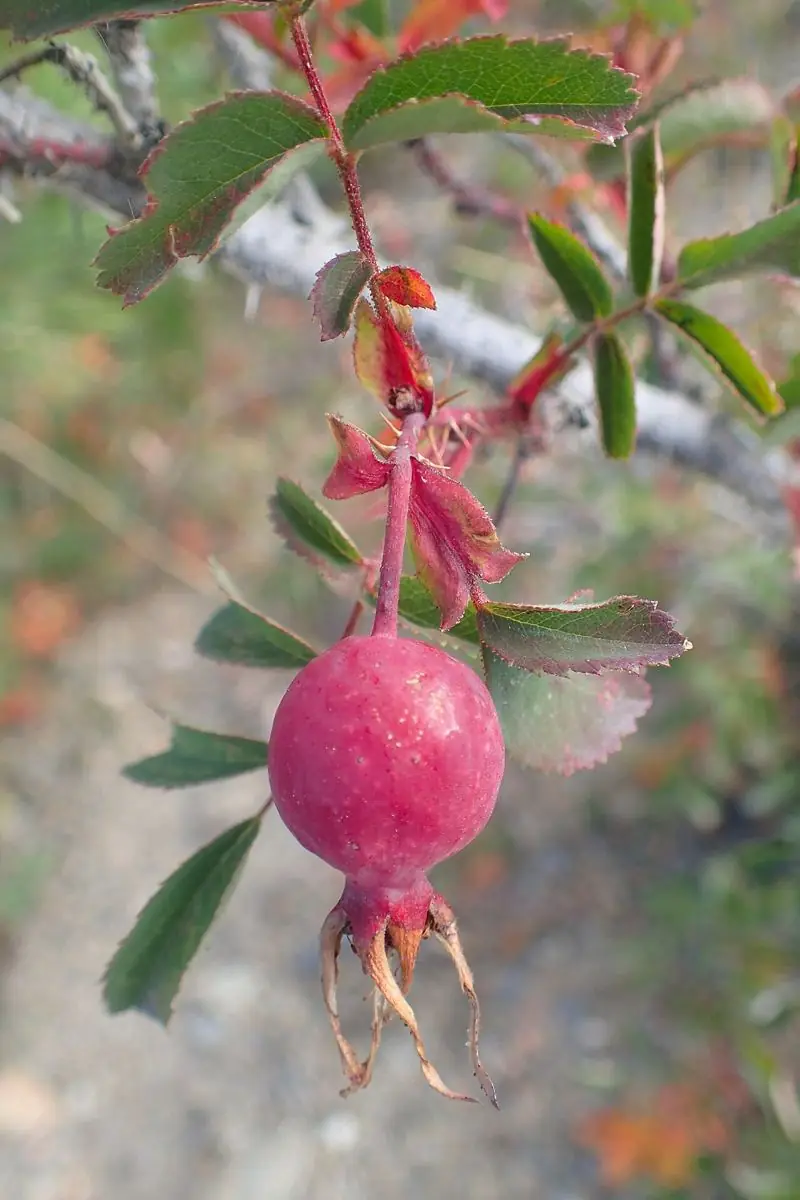
Every wild rose leaves behind hips: small red fruits that hang on through fall and into winter, sweetening after frost. Native families across the continent ate them fresh, dried them for winter, and brewed the petals, hips, and roots into tea. Europeans made the same fruit into syrups and jams, and during the Second World War British children were raised on rose hip syrup when oranges disappeared.
Traditional profile
Actions
- nutritiveA food-like herb, rich in vitamins or minerals.
- astringentTightens and dries tissue; the puckery feel of strong tea, from tannins.
- antioxidantRich in compounds that protect cells from oxidative damage.
Body systems
Culpeper (1653)
- Ruling planet
- Red roses under Jupiter, damask under Venus, white under the Moon
Native nations kept their own medical knowledge, and much of it was never written down or was recorded by outsiders. The uses on this page are the ones published in ethnobotanical records and credited to the nations named; they aren’t mapped onto Chinese or Ayurvedic systems, which don’t belong to them.
How to know it
Wild roses are prickly shrubs with compound leaves of five to eleven toothed leaflets and simple five-petaled pink flowers in early summer. The hips that follow are round to egg-shaped, orange-red to scarlet, with a crown of dried sepals at the tip. Inside are seeds wrapped in fine, irritating hairs.
Woods’ rose covers much of the West, prairie rose (R. arkansana) the Plains, and Nootka rose the Pacific Northwest. Rugosa rose, an Asian import naturalized on coasts, has the largest hips. Any rose hip is edible; wild ones usually taste best.
History & lore
The Lakota name wild rose uŋžíŋžiŋtka hú and record that “the petals, hips and roots all make a nice tea,” and that dried hips were stored for winter. The Ojibwe and many other nations ate the hips in soups and stews rather than throwing them out after making tea. Because hips stay on the bush all winter, they were an important food when little else was available.
Wild prairie rose is the state flower of North Dakota, and the wild rose of Iowa. In 1941 Britain’s Ministry of Food organized schoolchildren and volunteers to gather hundreds of tons of wild hips each autumn for a national rose hip syrup.
Growing it
Wild roses want sun and ordinary soil and are very hardy. They spread by suckers into a thicket, which makes them good for hedges and wildlife cover. They need no spraying and little pruning beyond removing old canes.
Varieties & companions
Woods’ rose and prairie rose are good native choices in the West and Plains; Virginia rose and pasture rose in the East. For big hips, rugosa roses and the European dog rose (R. canina) are the classics. ‘Hansa’ and ‘Frau Dagmar Hastrup’ are rugosas with especially large hips.
A rose hedge with chokecherry, serviceberry, and currant makes a wildlife and forage hedge that feeds birds and people.
Gathering & drying
Pick hips when they are fully colored and give slightly when pressed, ideally after the first frost has softened and sweetened them. For drying, split them and scrape out the seeds and hairs, then dry the shells until hard. For syrup or jelly, you can cook them whole and strain out the hairs.
At the hearth
Dried hips steeped with a little mint or bergamot make a tart winter tea. Rose petals were also dried for tea and scent, and the petals of wild roses can be infused in oil or honey.
In the kitchen
Rose hip syrup, jelly, jam, and soup (Swedish nyponsoppa) are the classic uses. Seeded, dried hips can be ground into a tart powder for baking and oatmeal. Always remove the seed hairs.
Traditional usage
Hips, petals, and roots were used. Hips were a food and tea; the inner bark and roots were boiled for diarrhea and stomach trouble, and the Lakota used the tea for bladder complaints. Across traditions, hips were seen as a food that kept people well through winter.
Native nations kept their own medical knowledge, and much of it was never written down or was recorded by outsiders. The uses on this page are the ones published in ethnobotanical records and credited to the nations named; they aren’t mapped onto Chinese or Ayurvedic systems, which don’t belong to them.
Culpeper sorted roses by color: red roses under Jupiter, damask under Venus, and white under the Moon.
Chemical constituents
Fresh hips are very rich in vitamin C, often several times richer than oranges by weight, though drying and heat destroy much of it. They also contain carotenoids (lycopene and β-carotene), pectin, flavonoids, and fruit acids. The seeds are pressed for rosehip seed oil, rich in linoleic and α-linolenic acids and used on the skin.
What the research says
Small European trials of powdered dog rose hips for arthritis pain reported modest benefit, but the studies were few and most were funded by the product’s maker. There is little research on wild North American species.
Rose hips in food amounts are safe. The main hazard is the seed hairs, which irritate the mouth and gut if not strained out.
Good to know
Children once used the seed hairs as itching powder. Strain syrups through a jelly bag or a double layer of cloth.
Further reading
- USDA NRCS Plant Guide: Woods’ roseRange, growing, and recorded uses by named nations.
- Linda S. Black Elk, Culturally Important Plants of the Lakota (Sitting Bull College, 1998)Lakota names and recorded uses.
- Native Foods: Rose hips (Indigenous Studies Kit)Ojibwe and other Native food uses of rose hips.
- Nicholas Culpeper, The Complete Herbal (1653)Free public-domain copy at Project Gutenberg.