Echinacea
Echinacea angustifolia & E. purpurea
The purple coneflower of the Great Plains, whose root makes the tongue tingle.
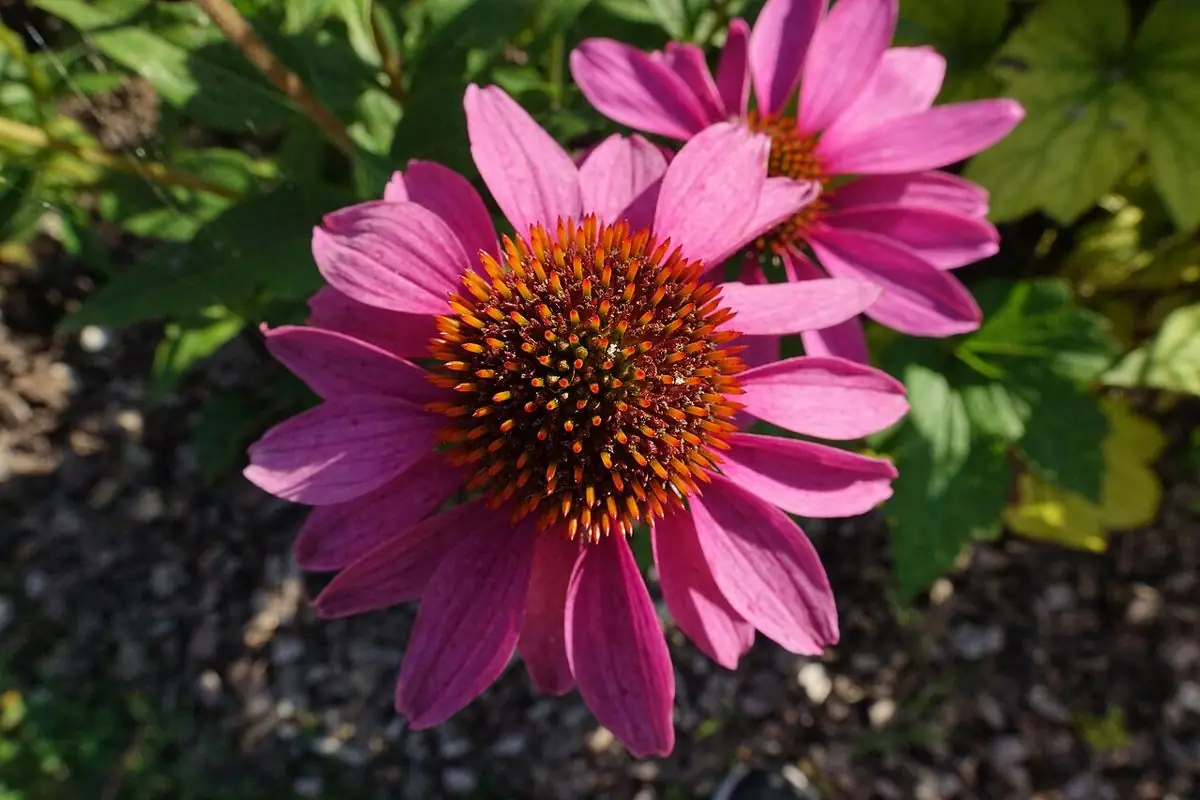
Echinacea’s drooping purple petals and spiny orange-brown cone are a familiar sight in prairie gardens now, but the root was a working medicine on the Plains long before it was a garden flower. Lakota families chewed it for toothache and sore throats and laid it on wounds and swellings. Settlers learned it from them, patent-medicine sellers made it famous, and today it is one of the best-selling herbs in the world.
Traditional profile
Actions
- immune-stimulantTraditionally used to rouse the body’s defenses against infection.
- anti-inflammatoryUsed to calm swelling, redness, and heat in tissues.
- vulneraryHelps wounds heal.
- sialagogueMakes the mouth water.
Body systems
Native nations kept their own medical knowledge, and much of it was never written down or was recorded by outsiders. The uses on this page are the ones published in ethnobotanical records and credited to the nations named; they aren’t mapped onto Chinese or Ayurvedic systems, which don’t belong to them.
How to know it
A perennial two to four feet tall with rough, hairy, lance-shaped leaves and single daisy-like flowers on stiff stems. The pink-purple petals droop down from a raised, spiny cone that turns orange-brown as the seeds ripen and stays on the plant through winter.
Narrow-leaf coneflower (E. angustifolia) is the wild Plains species, shorter, with slim leaves and a long taproot. Purple coneflower (E. purpurea) is the taller eastern species with broader, toothed leaves and fibrous roots; it is the one sold in garden centers. Chew a bit of the root of either and your tongue and lips will tingle and go slightly numb, which is the classic test for good echinacea.
History & lore
The Lakota call narrow-leaf coneflower ičháȟpe hú. USDA and Lakota records credit the Cheyenne, Dakota, Fox, Kiowa, Omaha, Pawnee, Ponca, Teton Sioux, and Winnebago with using the root for toothache, sore throat and cough, swellings, burns, and snakebite, often by chewing it or applying it as a poultice.
In the 1880s a Nebraska patent-medicine seller named H.C.F. Meyer began selling a root remedy he had learned about, and the Eclectic physicians of Cincinnati took it up. By the early 1900s echinacea was one of the most widely used plant medicines in America. When a German company went looking for seed in the 1930s they came home with the eastern purple coneflower instead of the Plains species, which is why most European research has been on E. purpurea.
Growing it
Coneflowers want full sun and well-drained soil, and once rooted they take heat, wind, and drought. Narrow-leaf coneflower is slow and hates wet ground; purple coneflower is easier and more forgiving. Seed sprouts best after a cold, damp winter spell, so sow it in fall or chill it in the fridge for a month in damp sand.
Leave the seed heads standing for goldfinches, which pick them clean in autumn.
Varieties & companions
For herb use, grow straight E. purpurea or E. angustifolia. Garden hybrids in orange, yellow, and double forms (‘Sombrero’, ‘Double Scoop’, and many others) are bred for looks and are shorter-lived. Pale purple coneflower (E. pallida) is another prairie species with long, pale petals.
Plant it with bee balm, black-eyed Susan, little bluestem, and butterfly weed for a small prairie bed that feeds bees and butterflies all summer.
Gathering & drying
Roots are dug in fall from plants at least three years old, washed, split, and dried. Tops (flowers, leaves, and stems) are cut when the flowers first open. Purple coneflower is a garden plant, so dig your own rather than buying wild-harvested Plains root.
Dry roots in slices and tops in bundles, both out of the sun. Good dried root still makes the tongue tingle.
At the hearth
Most households now use echinacea as a tea of the tops or a tincture of the root at the start of a cold. The Plains practice of chewing the fresh root for a sore mouth or toothache is still common among people who grow it.
In the kitchen
Echinacea isn’t really a kitchen herb. The flower petals are edible and can garnish a salad, but the plant is grown for tea, tincture, and its beauty in the garden.
Traditional usage
The root is the part most used, fresh or dried, chewed, as a strong tea (decoction), or as a tincture. The tops are steeped as a lighter tea. Recorded Native uses centered on the mouth and throat, wounds, swellings, burns, and bites; the Eclectic doctors used it as a “blood purifier” and for infections.
Native nations kept their own medical knowledge, and much of it was never written down or was recorded by outsiders. The uses on this page are the ones published in ethnobotanical records and credited to the nations named; they aren’t mapped onto Chinese or Ayurvedic systems, which don’t belong to them.
Chemical constituents
The tingling comes from alkamides (also called alkylamides), fatty compounds concentrated in the roots. Echinacea also contains caffeic acid derivatives: cichoric acid is the main one in E. purpurea, and echinacoside is characteristic of E. angustifolia and E. pallida roots. The tops carry polysaccharides and glycoproteins that are studied for their effects on the immune system.
Species and plant parts differ a lot, which is one reason studies of “echinacea” disagree.
What the research says
NCCIH says echinacea may slightly reduce the chance of catching a cold, but it is unclear whether it shortens a cold. Evidence in children is too thin to draw conclusions.
European regulators accept the pressed juice of fresh E. purpurea herb for short-term prevention and treatment of the common cold (a “well-established use” based on published studies), and as a traditional remedy for small superficial wounds.
Side effects are usually mild stomach upset, but allergic reactions, occasionally serious, can happen, especially in people allergic to daisy-family plants. Talk to a doctor before giving it to children.
Good to know
Wild narrow-leaf coneflower has been dug heavily for the herb trade and is on United Plant Savers’ at-risk list. Grow your own purple coneflower, or buy cultivated root.
Further reading
- NCCIH: EchinaceaResearch and safety summary, updated 2024.
- European Medicines Agency: Purple coneflower herb herbal summaryWhat European regulators accept, and on what evidence.
- USDA NRCS Plant Guide: Purple coneflowerRange, growing, and recorded uses by named nations.
- Linda S. Black Elk, Culturally Important Plants of the Lakota (Sitting Bull College, 1998)Lakota names and recorded uses.