Safflower
Carthamus tinctorius
A thistle-like dye plant from Pharaohs’ garlands, and a bruise herb in Chinese medicine.
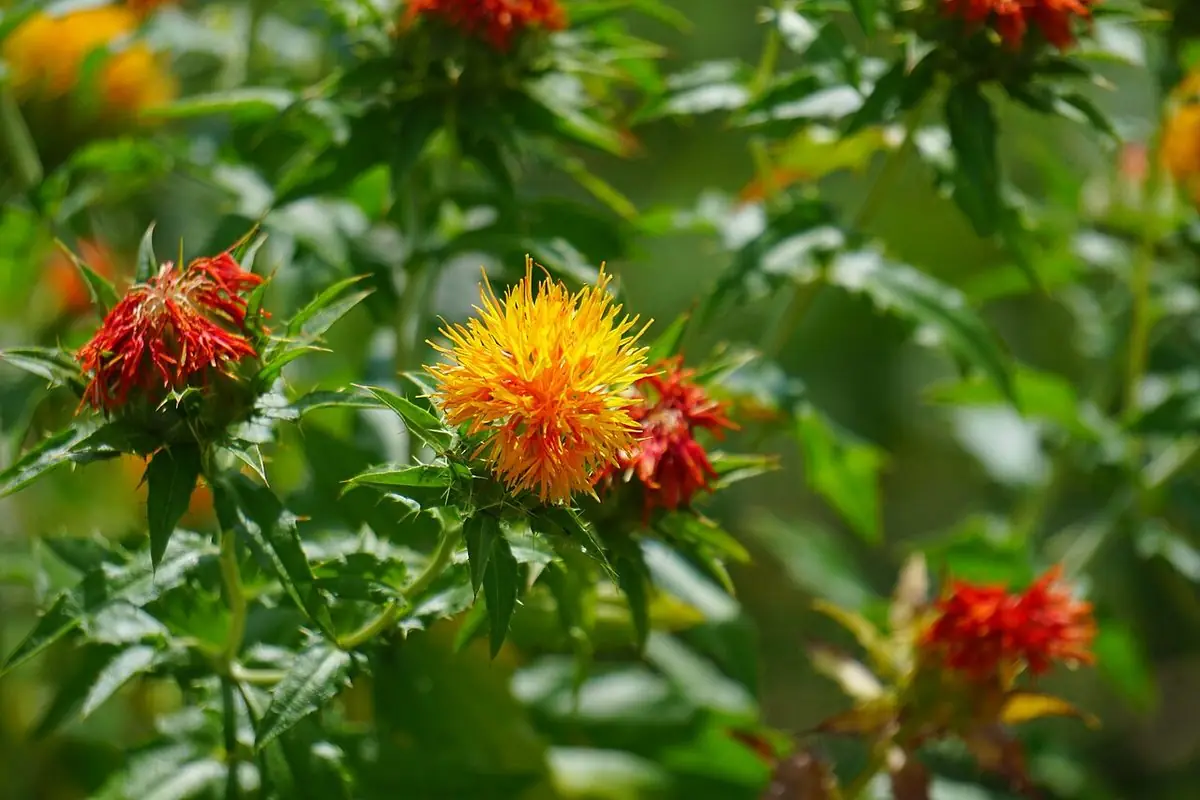
Safflower is one of the oldest crops in the world, grown for the red and yellow dyes in its florets and later for the oil in its seeds. In China the dried florets, hóng huā or “red flower,” became one of the main herbs for moving the blood, and they go into bruise liniments alongside myrrh and frankincense. It thrives in heat and drought, which makes it an easy plant for Arizona.
Traditional profile
Actions
- analgesicEases pain.
- anti-inflammatoryUsed to calm swelling, redness, and heat in tissues.
- antispasmodicRelaxes cramping muscle, as in the gut or womb.
Body systems
Chinese medicine
- Name
- 红花 Hóng huā
- Nature
- Warm
- Flavor
- Acrid
- Channels
- Heart, Liver
- Five phases
- Metal by flavor
How to know it
An upright annual two to four feet tall with stiff, glossy, spiny-edged leaves and thistle-like flower heads at the branch tips. The tufted florets open yellow and turn orange and then brick red as they age.
Dried safflower is a loose tangle of slender red-orange florets, often sold as “saffron” in markets, though true saffron is a few thick red threads per flower.
History & lore
Safflower florets were found in the garlands buried with Tutankhamun, and the plant was grown across Egypt and the Near East for dyeing cloth. It is still called “bastard saffron” for its use as a cheap stand-in for the real spice.
Chinese tradition says safflower arrived from Central Asia in the Han dynasty. In Japan the red dye, beni, colored silk and the lip rouge of court ladies and geisha, and the Mogami region of Yamagata grew so much that the flower became its symbol.
Growing it
Sow seed directly in spring in full sun and well-drained soil; it dislikes transplanting and rich, wet ground. Safflower is drought-tolerant once established and has long been a field crop in Arizona and California. Wear gloves: the leaves are sharp.
Varieties & companions
Spineless varieties are easier to handle for florets. Oil varieties are bred for high-oleic or high-linoleic seed. It is a good cut flower and an easy companion in a hot, dry corner with sunflowers and other daisy-family plants.
Gathering & drying
Pick the florets in the morning when they are turning from yellow to red, pulling the tufts from the heads, and dry them in the shade. Leave some heads to ripen for seed.
At the hearth
The florets were a household dye. Soaking in water washes out the yellow; the red that stays behind is released with an alkaline rinse, which is how old dyers got two colors from one flower.
In the kitchen
A pinch of florets colors rice, soups, and cheese a warm yellow, though it has little flavor compared with saffron. Safflower oil, pressed from the seeds, is a common neutral cooking oil.
Traditional usage
Florets as tea, decoction, tincture, and liniment; seeds for oil. In Chinese medicine hóng huā “moves the blood”: it is used for painful periods, bruises, swelling from injury, and chest pain from “blood stasis,” and it is a standard ingredient in bruise liniments.
The dit da jow formula and several trauma remedies in Walker and Bauer’s The Ancient Art of Life and Death (2002) include safflower as a minister herb alongside tienchi ginseng, myrrh, and frankincense.
Chinese medicine: acrid, warm, entering the Heart and Liver channels.
Chemical constituents
The florets contain the red pigment carthamin and water-soluble yellow pigments, the best studied being hydroxysafflor yellow A. The seeds are 30 to 45 percent oil, rich in linoleic acid in traditional varieties.
What the research says
Safflower extracts, especially hydroxysafflor yellow A, have been studied in China for heart and stroke care, but most trials are small. There is little good-quality research on home use of the florets.
Chinese medicine forbids safflower florets in pregnancy because they stimulate the uterus. They may add to the effect of blood thinners and are avoided with heavy bleeding. People allergic to daisy-family plants may react. Safflower oil as food is a different matter and is safe.
Good to know
Much of the “saffron” sold cheaply in markets and online is safflower. Real saffron costs far more by weight.
Further reading
- Me & Qi: Hong Hua (safflower)Chinese medicine properties and uses.
- Alternative Field Crops Manual: Safflower (Purdue University)History, uses, and how it is grown as a crop.