Peppermint
Mentha × piperita
Sharp, cooling, and nearly impossible to get rid of once it’s in the ground — in the best way.
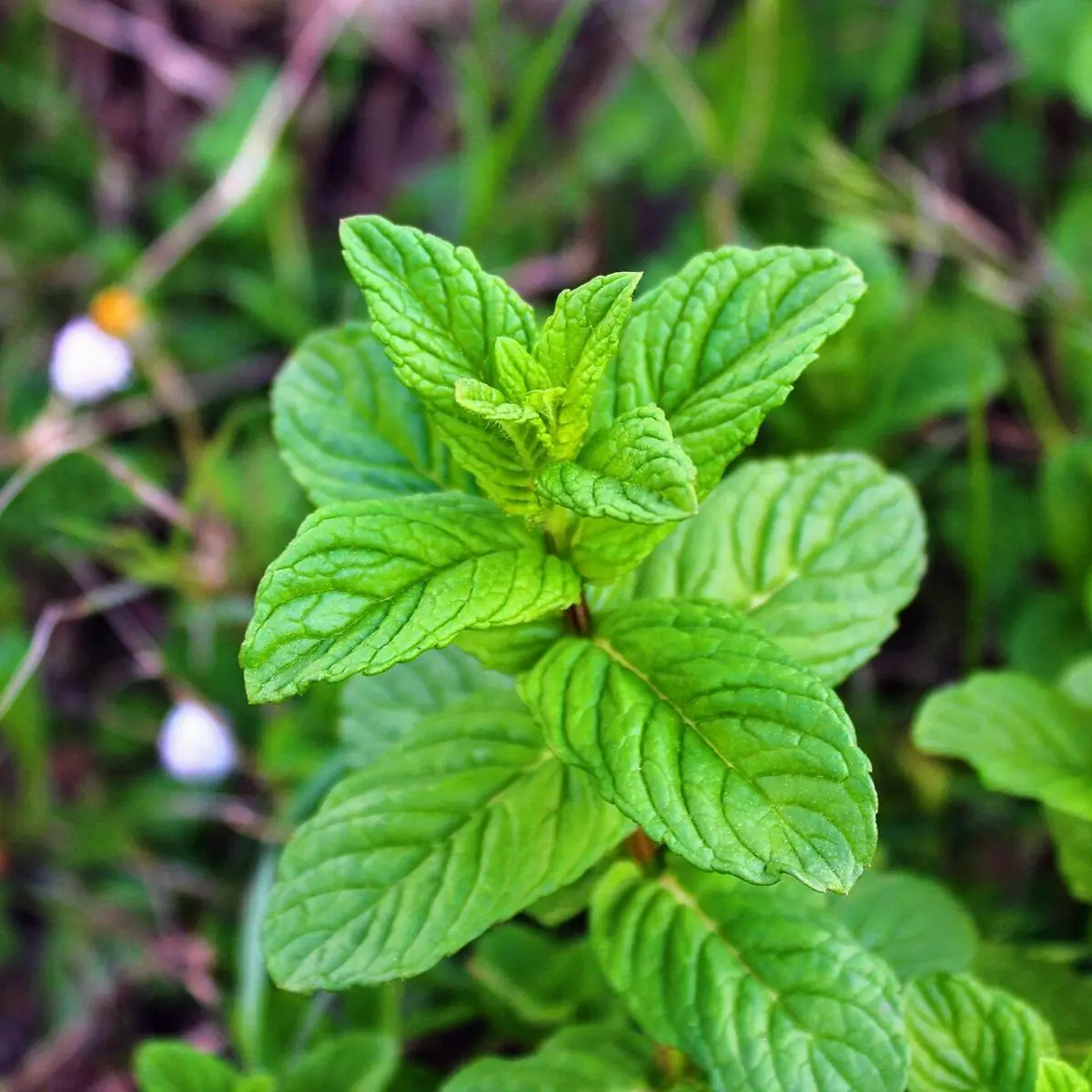
Peppermint spreads by runners with real enthusiasm, which is why most gardeners eventually pot it rather than let it loose in a bed. The reward is a ready supply of cool, sharp leaves through most of the growing season, steeped fresh or dried into the after-dinner cup that’s been a table tradition for settling a full stomach for as long as anyone can remember.
Traditional profile
Actions
- carminativeEases gas, bloating, and colic.
- antispasmodicRelaxes cramping muscle, as in the gut or womb.
- diaphoreticBrings on a sweat; used at the start of a cold or fever.
- aromaticRich in fragrant oils, which tend to settle the stomach and clear the head.
Body systems
Chinese medicine
- Name
- 薄荷 Bò hé (field mint, a close relative)
- Nature
- Cool
- Flavor
- Acrid, aromatic
- Channels
- Lung, Liver
- Five phases
- Metal by flavor
Culpeper (1653)
- Ruling planet
- Venus (mints)
How to know it
A perennial one to three feet tall with square stems, often tinged purple, and pairs of pointed, toothed, dark green leaves. Small lilac flowers bloom in slender spikes at the tips in summer. Rub a leaf and the smell is sharp and cooling, stronger and more menthol than spearmint.
Peppermint is a natural cross between water mint and spearmint and almost never sets good seed. Packets sold as “peppermint seed” usually grow into something milder, so start it from a rooted runner or a nursery plant you have sniffed first.
History & lore
Mints are ancient, but peppermint itself was first described in England. The botanist John Ray published it in 1696, and it entered the London Pharmacopoeia in 1721. By the late 1700s Mitcham in Surrey had over a hundred acres of peppermint for distilling, and ‘Black Mitcham’ is still a standard variety.
American growers took over in the 1800s, first in New York and then Michigan, where Albert M. Todd became known as the “Peppermint King.” Most of today’s U.S. crop grows in Washington, Oregon, and Idaho.
The genus is named for Minthe, a nymph in Greek myth who was turned into a mint plant by a jealous Persephone. Pliny wrote that the Greeks and Romans wore crowns of mint at feasts.
Growing it
It likes moist, rich soil and grows in sun or part shade. Its runners travel fast underground and above it, so most people grow it in a large pot, or in a bottomless bucket sunk into the bed with the rim just above the soil.
Cut it back hard once or twice a season to keep it bushy, and divide or replant every few years when the middle of the clump gets woody.
Varieties & companions
‘Black Mitcham’ has dark stems and a strong, classic flavor; ‘White Mitcham’ is milder and greener. “Chocolate mint” is a peppermint selection with a cocoa-like note, and orange or bergamot mint is a citrus-scented form. Spearmint and water mint, peppermint’s parents, are separate plants.
Keep mints apart from each other and from other herbs, since the runners mingle and take over. A pot near the vegetable bed or kitchen door works well. Folk gardening says mint keeps cabbage moths and ants away; there is little evidence, but the flowers do draw many pollinators.
Gathering & drying
The leaves are at their most fragrant just before the plant flowers. Cut whole stems a few inches above the ground on a dry morning; the plant will regrow for another cutting.
Hang small bundles in the shade or strip the leaves onto screens. Keep dried leaves whole in a jar and crumble them only when you use them, so the scent lasts.
At the hearth
The after-dinner infusion is the standard use. A handful of fresh stems in a basin of hot water makes a plain, cooling foot soak, and dried leaves have long been tucked into cupboards and pantry corners for their smell.
In the kitchen
Fresh leaves go into iced tea, fruit salads, and chocolate desserts, and they make a sharp syrup for summer drinks. For savory mint sauce and yogurt dishes, spearmint is the more usual choice; peppermint’s menthol can be overpowering.
Traditional usage
The leaves are the part used, fresh or dried, and so is the distilled oil. The standard household use was an after-dinner infusion, a teaspoon or two of dried leaf per cup, steeped covered so the oil doesn’t escape. Peppermint was a common ingredient in cold teas with yarrow and elderflower.
In Chinese martial arts herbalism, field mint (bò hé) is one of five herbs in shuāng bǎi sǎn, a cooling paste made with honey and spread on hot, swollen injuries, as recorded in Walker and Bauer’s The Ancient Art of Life and Death (2002).
The oil, much stronger than the leaf, went into lozenges, liniments, and chest rubs, and a drop in hot water was inhaled for a stuffy head. Dried leaves were scattered in cupboards against mice, a use repeated in many old books.
Chemical constituents
The oil is mostly menthol, typically around a third to half, and menthone, often around a fifth. It also contains menthyl acetate, 1,8-cineole, isomenthone, menthofuran, and limonene, with a trace of pulegone, which is limited in food and medicine standards. Menthol is what triggers the cold-sensing receptors in the mouth and skin, giving peppermint its cooling feel.
The leaf also contains rosmarinic acid, flavonoids such as eriocitrin, luteolin, and hesperidin, and tannins.
What the research says
Most research is on peppermint oil, not the tea. NCCIH reports that a 2022 review found enteric-coated peppermint oil capsules better than placebo for overall irritable bowel syndrome symptoms and belly pain. Inhaled oil has shown promise for nausea during chemotherapy, and oil on the skin may help tension headaches, though the evidence there is limited.
For the leaf, NCCIH says there is too little research to know whether it helps any health condition. European regulators list peppermint leaf as a traditional herbal medicine for indigestion and gas, based on long use.
Peppermint tea appears safe. The oil can cause heartburn, especially in people with reflux, and should never be put on the face of babies or young children because menthol can affect their breathing.
Further reading
- NCCIH: Peppermint OilResearch on the oil and leaf, updated 2025.
- European Medicines Agency: Peppermint leaf herbal summaryWhat European regulators accept as traditional use, and why.
- Mrs. M. Grieve, A Modern Herbal (1931): MintsJohn Ray, Mitcham, and old mint lore.
- Nicholas Culpeper, The Complete Herbal (1653)Free public-domain copy at Project Gutenberg.