Licorice
Glycyrrhiza glabra & G. uralensis
The “sweet root” and “national elder” of Chinese medicine, fifty times sweeter than sugar.
Licorice root has been used from China to England for thousands of years. In Chinese medicine, gān cǎo appears in more formulas than any other herb and was called the “national elder” for its way of harmonizing the others. In Europe, it was chewed as a sweet and boiled into cough syrups before it became candy.
Traditional profile
Actions
- demulcentCoats and soothes irritated tissue with slippery mucilage.
- expectorantHelps loosen and bring up mucus from the chest.
- antispasmodicRelaxes cramping muscle, as in the gut or womb.
- anti-inflammatoryUsed to calm swelling, redness, and heat in tissues.
Body systems
Chinese medicine
- Name
- 甘草 Gān cǎo
- Nature
- Neutral
- Flavor
- Sweet
- Channels
- Heart, Lung, Spleen, Stomach
- Five phases
- Earth by flavor
Ayurveda
- Name
- Yashtimadhu
- Taste
- Sweet
- Potency
- Cooling
- After digestion
- Sweet
- Doshas
- Pacifies Vata and Pitta
Culpeper (1653)
- Ruling planet
- Mercury
How to know it
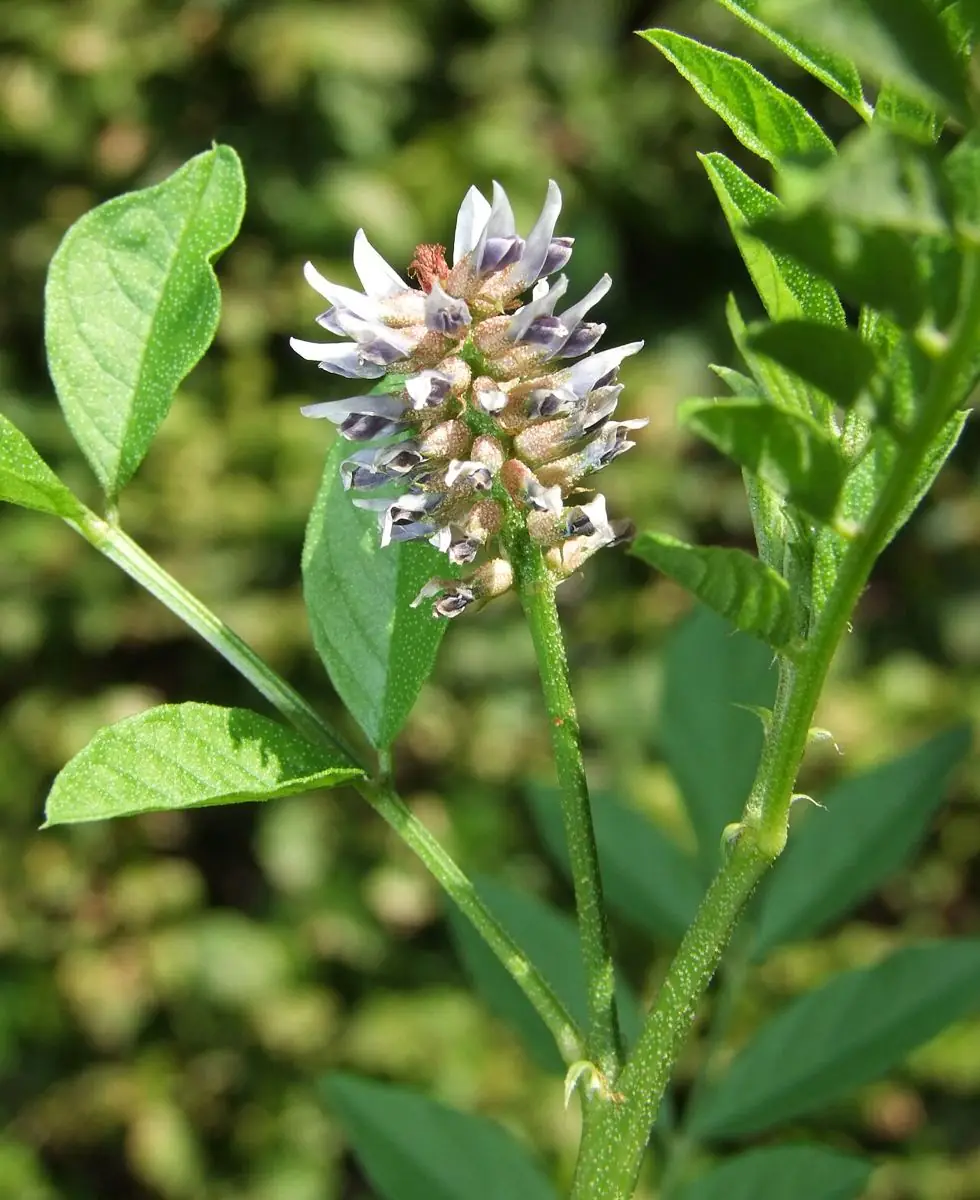
A perennial legume three to five feet tall with pinnate leaves of 9 to 17 oval leaflets, spikes of pale blue-violet pea flowers, and flat brown pods. The roots and underground runners are long, fibrous, yellow inside, and intensely sweet when chewed.
G. glabra is the European and Middle Eastern species; G. uralensis is the main Chinese species. American licorice (G. lepidota) is a milder native relative that grows wild across the West.
History & lore
The name comes from Greek glykyrrhiza, “sweet root.” Chinese herbalists called it guó lǎo, the “national elder,” because it softens harsh herbs and brings a formula together. In England licorice was grown at Pontefract in Yorkshire from the Middle Ages, and the town’s little black Pontefract cakes became one of the first licorice sweets.
Culpeper put licorice “under the dominion of Mercury” and boiled it with figs for “a dry cough or hoarseness.” Most modern licorice candy is flavored mainly with anise oil rather than licorice root.
Growing it
Plant runners or crowns in deep, sandy, well-drained soil in full sun. It needs a long warm season and spreads underground once established. Roots are ready to harvest in the third or fourth year.
Varieties & companions
Grow the true species; there are few named varieties. It fixes nitrogen and can be planted near hungry crops, but give it its own bed, as the runners spread.
Gathering & drying
Dig roots and runners in fall of the third or fourth year, wash them, cut them into lengths, and dry them slowly. Leave some runners in the ground to regrow.
At the hearth
Children once chewed sticks of dried root as a sweet. A small piece of root in a cough tea or with ginger and honey soothes a scratchy throat.
In the kitchen
Licorice root sweetens herbal tea blends and some braises and spiced liquors. Use it sparingly; a little adds a lot of sweetness and a lingering aftertaste.
Traditional usage
Root as tea, decoction, syrup, lozenge, and paste. In Chinese medicine it is used to strengthen digestion, ease cough, relieve spasms and pain, and harmonize formulas. In Europe and the Middle East it was a staple for coughs, hoarseness, and stomach upsets. Ayurveda calls it yashtimadhu and uses it for cough, hoarseness, and wounds.
In the Four Gentlemen decoction (sì jūn zǐ tāng), the base of many classical qi tonics described in Walker and Bauer’s The Ancient Art of Life and Death (2002), licorice sits beside ginseng, atractylodes, and poria and plays the envoy, the herb that brings the others into agreement.
Chinese medicine: sweet, neutral, entering the Heart, Lung, Spleen, and Stomach channels; a qi tonic. Ayurveda: sweet taste, cooling potency, sweet post-digestive effect; pacifies Vata and Pitta. Culpeper: Mercury.
Chemical constituents
Licorice’s sweetness comes from glycyrrhizin (glycyrrhizic acid), roughly 30 to 50 times sweeter than sugar. The root also contains flavonoids such as liquiritin and isoliquiritigenin, which give it a yellow color, glabridin in G. glabra, and coumarins. “DGL” licorice has most of the glycyrrhizin removed.
What the research says
NCCIH says there isn’t enough high-quality evidence to support licorice for any condition, though early studies hint at help for canker sores, sore throat after surgery, and some skin problems. European regulators list licorice root as a traditional herbal medicine for cough and cold and for mild digestive complaints.
Glycyrrhizin makes the body hold salt and lose potassium. Large amounts, or small amounts every day, can raise blood pressure and cause dangerous heart rhythms, especially in people with high blood pressure, heart or kidney disease, or a salty diet. Heavy licorice use in pregnancy has been linked to preterm birth. Check with a doctor before using licorice regularly, especially if you take medications.
Good to know
Most U.S. “black licorice” candy contains some real licorice extract; eating a lot of it every day has caused hospital stays.
Further reading
- NCCIH: Licorice RootResearch and safety summary, updated 2025.
- European Medicines Agency: Licorice root herbal summaryWhat European regulators accept, and on what evidence.
- Me & Qi: Gan Cao (licorice root)Chinese medicine properties and uses.
- The Ayurvedic Pharmacopoeia of India, Part I, Vol. 1Government of India monographs: taste, potency, and actions.
- Nicholas Culpeper, The Complete Herbal (1653)Free public-domain copy at Project Gutenberg.