Lavender
Lavandula angustifolia
Silvery stems topped with dense violet spikes, carried in from Mediterranean hillsides centuries ago.
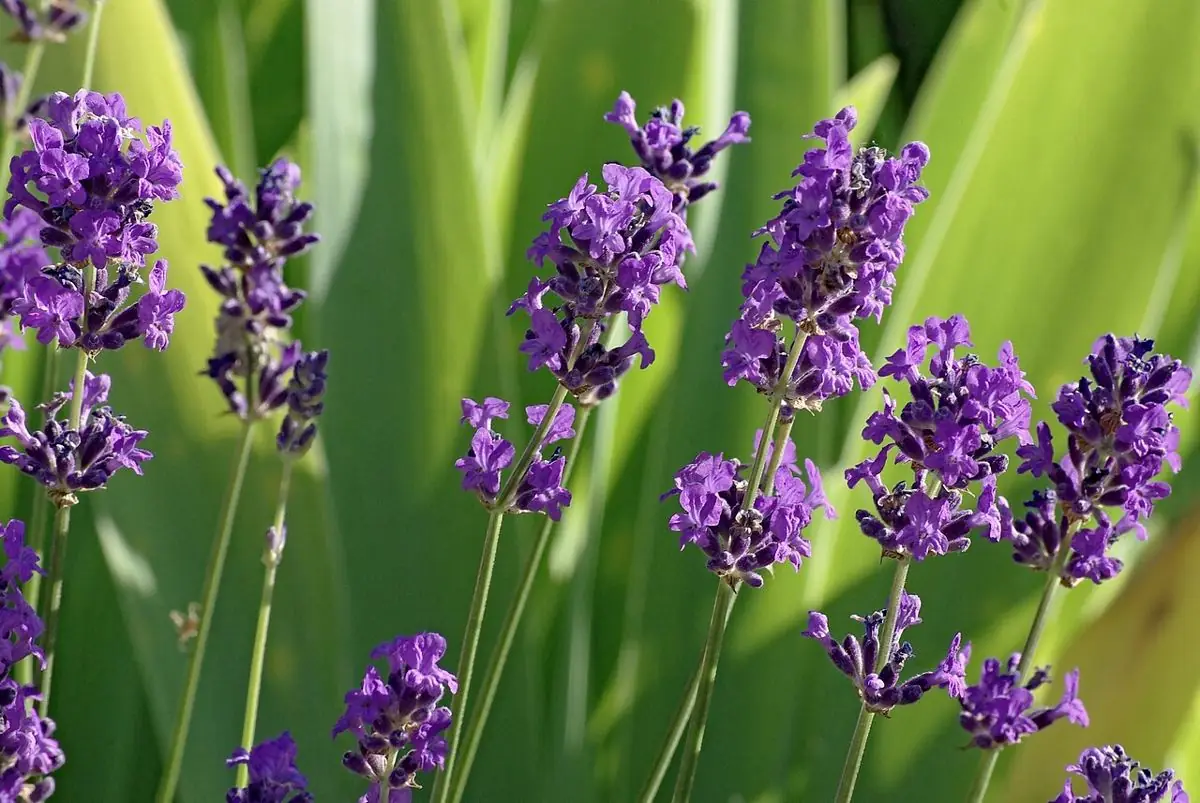
Lavender’s narrow silver-green leaves and upright purple spikes have scented linen presses and sachets since the herb first traveled north from the Mediterranean coast. The flowers hold their fragrance long after drying, which is why bundles of it still hang from cottage rafters. Infused into oil, it becomes the base for a simple bedside balm; strewn loose, it has always been the herb reached for when a room, or a nerve, needs settling.
Traditional profile
Actions
- nervineActs on the nerves: relaxing nervines calm, tonic nervines restore.
- carminativeEases gas, bloating, and colic.
- antispasmodicRelaxes cramping muscle, as in the gut or womb.
- antimicrobialActs against bacteria, fungi, or other microbes, at least in the lab.
Body systems
Culpeper (1653)
- Ruling planet
- Mercury
How to know it
A small woody shrub, usually one to three feet tall, with narrow gray-green leaves and square young stems like the rest of the mint family. In summer it sends up bare stalks topped with spikes of small violet flowers, and the whole plant smells strongly when brushed.
This is the plant usually sold as English or true lavender. Lavandin, a larger hybrid grown in fields for oil, has longer stems and a sharper, more camphor-like smell; Spanish lavender is easy to tell by the little purple ‘ears’ on top of each flower head.
History & lore
The name is usually traced to the Latin lavare, “to wash,” from the Roman habit of scenting bathwater with lavender, though some scholars think it comes from livere, “bluish.” Pliny wrote that the flowers of a related plant sold for a hundred denarii a pound.
Lavender reached English gardens by the 1500s. Mitcham in Surrey became the center of English lavender growing, and “Mitcham lavender oil” kept its name as the finest grade long after London had built over the fields. Lavender water, a scented spirit, stayed popular for some 250 years.
Glovers who scented their leather with lavender were said to escape the plague. That story is repeated often, but there is no good record behind it.
Growing it
Lavender wants full sun and lean, fast-draining soil, and it does better when it is left a little thirsty than when it is watered and fed. Wet roots in winter kill more lavender than cold does, so a raised bed, a slope, or gravel mixed into heavy ground all help.
Trim the plant back by about a third after it finishes flowering to keep it compact, but don’t cut into the bare old wood below the leaves, because it rarely sprouts again from there.
Varieties & companions
‘Munstead’ and ‘Hidcote’ are the classic compact English lavenders; ‘Hidcote’ is the darker purple. ‘Folgate’ and ‘Vera’ are good for drying. Lavandins such as ‘Grosso’ and ‘Provence’ are bigger, longer-stemmed, and grown for oil. Spanish lavender (L. stoechas) is showier but less hardy and not used in cooking.
It pairs naturally with rosemary, thyme, and sage, which want the same sun and dry soil, and it is a traditional edging for rose beds. It is one of the best bee plants in the garden.
Gathering & drying
Cut the stems when about half the buds on the spike have opened, in the morning once the dew has dried. Take a long stem so it is easy to bundle.
Tie small bunches with string or a rubber band (the stems shrink as they dry) and hang them upside down somewhere dark and airy for a week or two. Once dry, rub the buds off over a bowl and keep them in a jar, or leave the bundles whole for hanging.
At the hearth
Lavender’s long household career is mostly about scent: sachets tucked among linens and woolens, bundles hung in closets, loose buds strewn in drawers, and rinse water for laundry. Infused into oil and thickened with beeswax, it makes a plain bedside balm.
In the kitchen
Use it sparingly — a pinch of buds goes into shortbread, sugar, honey, or a lemonade syrup, and too much tastes of soap. English lavender is the one to cook with; lavandin is too sharp.
Traditional usage
The flower buds are the part used, dried or distilled. Households steeped a teaspoon or so of dried buds per cup for a calming tea, filled sachets and small pillows, and added bundles to bathwater.
The distilled oil was dabbed on the temples for headache, used in liniments, and mixed into lavender water. Old herbals recommended lavender for faintness, “nervous” complaints, and trouble sleeping.
Chemical constituents
Most of lavender’s scent comes from two compounds, linalool and linalyl acetate, which together usually make up more than half of the oil in English lavender. Smaller amounts of lavandulyl acetate, terpinen-4-ol, and β-caryophyllene round it out.
English lavender is low in camphor and 1,8-cineole. Lavandin and spike lavender have much more of both, which gives them their sharper, medicinal smell. The flowers also contain rosmarinic acid, tannins, and coumarins.
What the research says
NCCIH reports that an oral lavender-oil product has shown possible benefit for anxiety, but the studies were small and many weren’t independently funded. Early reports on lavender tea or capsules for low mood are also small. Whether lavender aromatherapy helps anxiety, pain, or sleep is still unclear.
European regulators list lavender flower as a traditional herbal medicine for mild stress and exhaustion and to help sleep, based on long use rather than trials.
Lavender in food amounts is considered safe. Taken by mouth it can cause stomach upset or headache in some people, and skin products can cause allergic rashes. It may add to the effect of sedatives, and its safety in pregnancy isn’t known.
Further reading
- NCCIH: LavenderResearch and safety summary, updated 2025.
- European Medicines Agency: Lavender flower herbal summaryWhat European regulators accept as traditional use, and why.
- Mrs. M. Grieve, A Modern Herbal (1931): LavendersMitcham, lavender water, and old uses.