Holy Basil (Tulsi)
Ocimum tenuiflorum
The sacred basil grown in Indian courtyards, with a clove-like scent and a daily cup of tea.
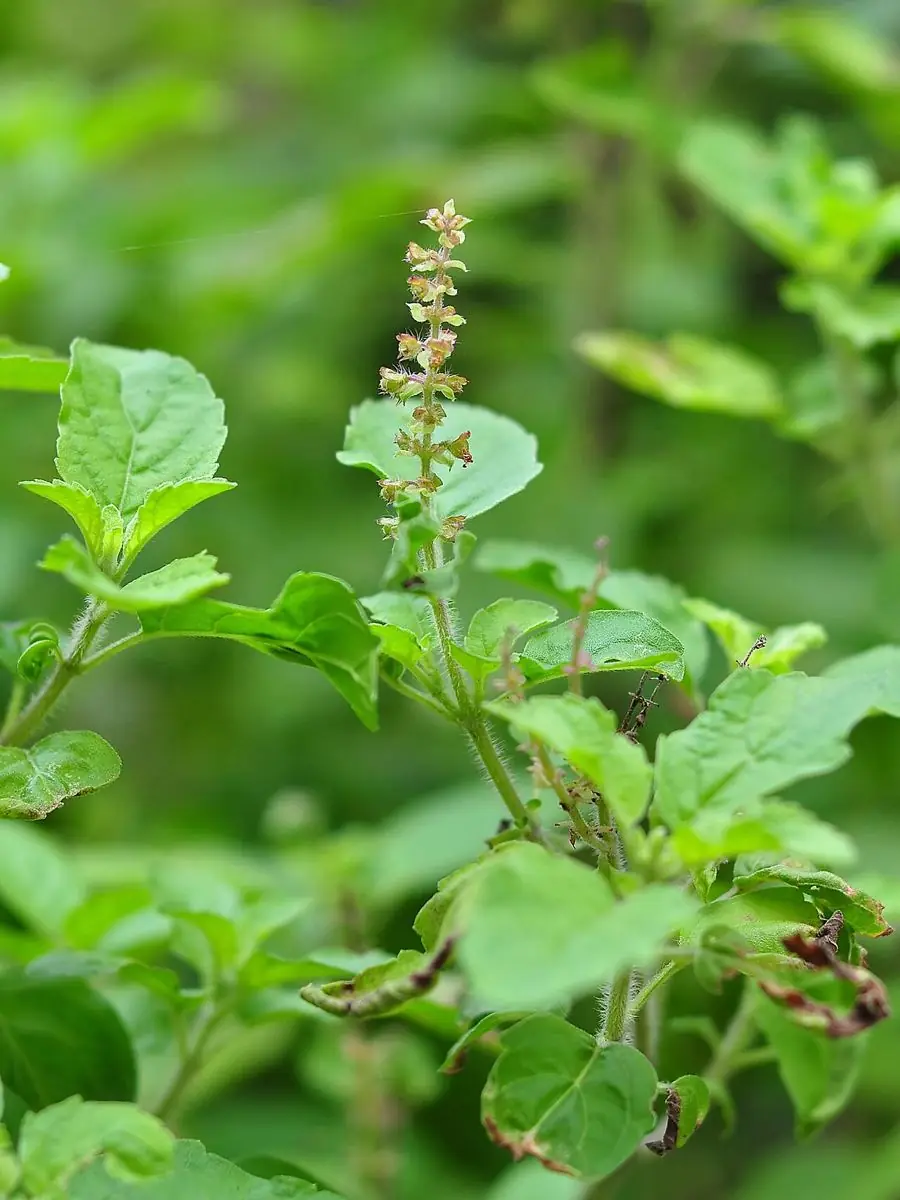
Tulsi is a basil of India with a spicy, clove-like smell very different from Italian basil. In many Hindu homes a tulsi plant grows in a raised planter in the courtyard and is tended every day. Its leaves are chewed, brewed into tea, and added to kadha, the spiced decoction Indian families make when a cold comes on.
Traditional profile
Actions
- adaptogenSaid to help the body cope with stress and return to balance. A modern term, not an old one.
- expectorantHelps loosen and bring up mucus from the chest.
- diaphoreticBrings on a sweat; used at the start of a cold or fever.
- carminativeEases gas, bloating, and colic.
Body systems
Ayurveda
- Name
- Tulasi
- Taste
- Pungent, bitter, astringent
- Potency
- Heating
- After digestion
- Pungent
- Doshas
- Reduces Kapha and Vata
How to know it
A branching, slightly woody annual or short-lived perennial one to three feet tall, with hairy stems, oval, softly toothed leaves in pairs, and long spikes of small purple or white flowers. The leaves smell of clove, pepper, and mint.
History & lore
Tulsi is sacred in Hinduism, especially to devotees of Vishnu and Krishna, and the plant itself is honored as a goddess. Many households grow it in a special planter (tulsi vrindavan), and the annual Tulsi Vivah festival celebrates its symbolic marriage to Vishnu. Its name means “the incomparable one.”
Three types are recognized: green Rama tulsi, purple Krishna tulsi, and wild Vana tulsi (O. gratissimum), which has a lemony scent.
Growing it
Easy in warm weather: sow seed on the surface after frost and keep it in sun with regular water. It is frost-tender, so treat it as an annual outdoors or bring a pot inside for winter. Pinch the flower spikes for more leaves, or let them bloom for bees.
Varieties & companions
Rama (green), Krishna (purple-leaved), and Vana (wild) are the traditional types; ‘Kapoor’ tulsi, sold widely in the U.S., is a hardier annual. Grow it with other basils, lemongrass, and ginger.
Gathering & drying
Pick leaves and flowering tops as needed, taking the top sets of leaves so the plant branches. Dry in the shade; the scent holds well.
At the hearth
A few fresh leaves steeped in hot water, or chewed on their own, are a daily habit in many Indian homes. Tulsi goes into kadha for colds and coughs, and tulsi with honey is given for a sore throat.
In the kitchen
Tulsi is mostly used for tea rather than cooking, but it can flavor syrups, chai, and Thai-style stir-fries (the Thai holy basil, kra pao, is the same species).
Traditional usage
Leaves, flowers, and seeds. In Ayurveda tulsi is used for cough, colds, asthma, fever, hiccups, loss of appetite, skin disease, and to relieve stress, and it is valued as a daily tonic.
Ayurveda (tulasi): pungent, bitter, and astringent taste, heating potency, pungent post-digestive effect; reduces Kapha and Vata (and Pitta, according to the Indian pharmacopoeia).
Chemical constituents
Tulsi’s oil is often dominated by eugenol, the main compound of clove oil, with methyl eugenol, β-caryophyllene, and others in varying amounts depending on type. The leaves also contain ursolic acid, rosmarinic acid, and flavonoids.
What the research says
A 2017 systematic review of about two dozen human studies found favorable results for tulsi on stress, blood sugar and cholesterol, and immune measures, with no serious side effects reported, but most studies were small and of mixed quality.
Tulsi tea is widely considered safe. Its effects on fertility and pregnancy are not well studied, so pregnant women and those trying to conceive should avoid concentrated supplements, and people on blood thinners or diabetes medicines should check with a doctor.
Good to know
Tulsi is a sacred plant to many people; if you share it, share it with the respect it is given in Indian homes.
Further reading
- Jamshidi & Cohen, Evidence-Based Complementary and Alternative Medicine (2017)Systematic review of tulsi in humans.
- The Ayurvedic Pharmacopoeia of India, Part I, Vol. 2Government of India monographs: taste, potency, and actions.