Cardamom
Elettaria cardamomum
The “queen of spices”: small green pods from the hills of Kerala that perfume chai and Nordic buns.
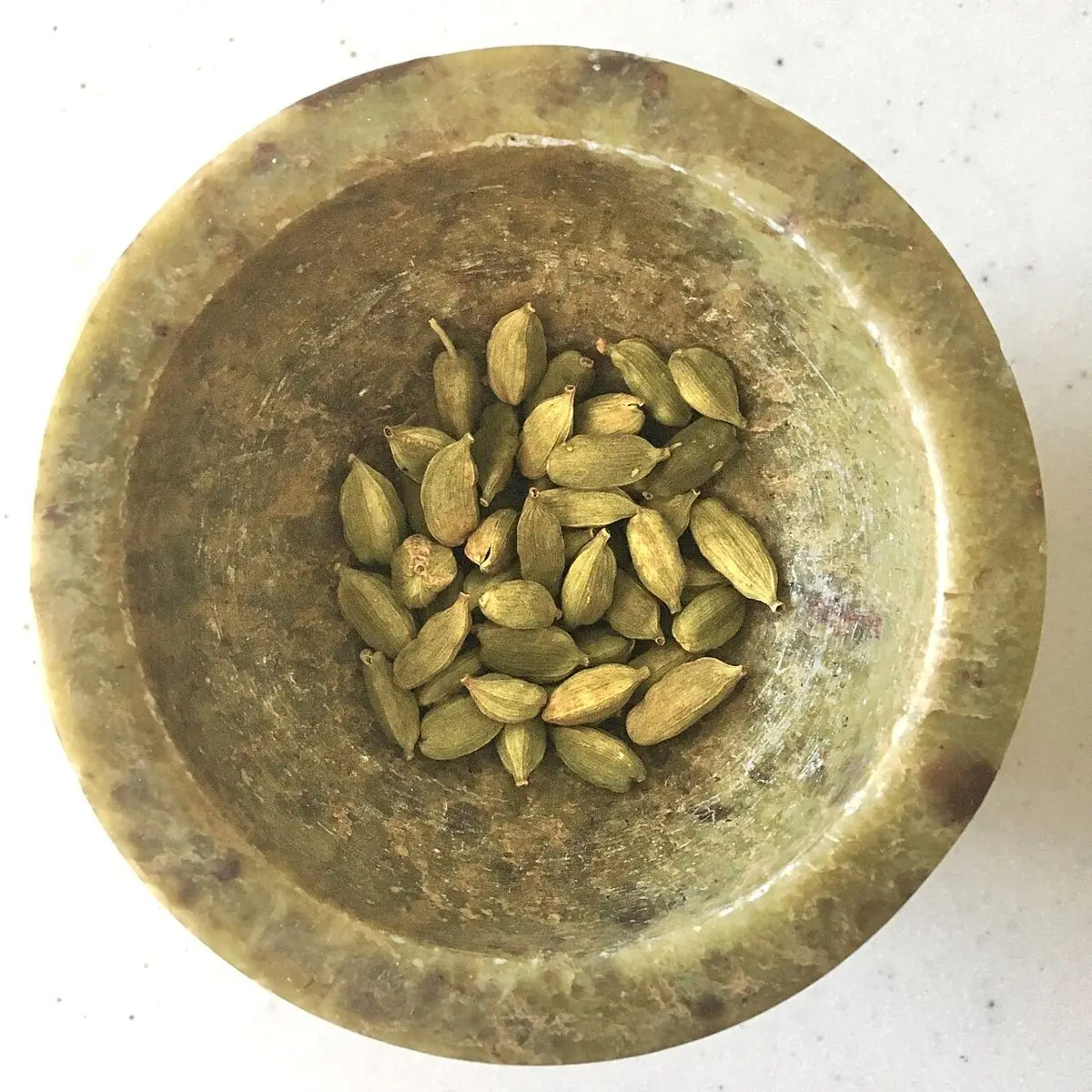
Cardamom comes from a tall, ginger-like plant of the rainforests of the Western Ghats in southern India. Its small green pods hold sticky black seeds with a sweet, cool, eucalyptus-like scent. It flavors Indian chai and sweets, Arabic coffee, and Swedish cardamom buns, and it is one of the world’s most expensive spices after saffron and vanilla.
Traditional profile
Actions
- carminativeEases gas, bloating, and colic.
- aromaticRich in fragrant oils, which tend to settle the stomach and clear the head.
- antiemeticSettles nausea and vomiting.
- expectorantHelps loosen and bring up mucus from the chest.
Body systems
Ayurveda
- Name
- Sukshmaila (small cardamom)
- Taste
- Sweet, pungent
- Potency
- Cooling
- After digestion
- Sweet
- Doshas
- Gentle and balancing
How to know it
A clumping perennial six to ten feet tall with long, narrow leaves on reed-like stems. Flower stalks creep along the ground from the base, bearing white flowers striped with purple, followed by small, three-sided green pods. Each pod holds 15 to 20 small, dark, aromatic seeds.
Black cardamom (Amomum subulatum) is a different plant with larger, smoky-tasting pods used in savory dishes.
History & lore
Cardamom was traded from India to the ancient Near East and is mentioned in early Ayurvedic texts; Greek physicians knew it as a digestive spice. The Cardamom Hills of Kerala were the center of the trade for centuries.
A German coffee planter brought cardamom to Guatemala before the First World War, and since the late 1970s Guatemala has rivaled or passed India as the largest producer, though Guatemalans themselves rarely cook with it. Most of that crop goes to the Arabian Gulf for coffee.
Growing it
Cardamom needs warmth, shade, humidity, and rich, moist soil, and it rarely fruits outside the tropics. In dry climates it makes a handsome, fragrant-leaved houseplant or patio plant in shade; the leaves can be used to wrap and flavor food.
Varieties & companions
Pods are sold by grade and origin: ‘Malabar’ and ‘Mysore’ types from India, and Guatemalan cardamom. Grow it as a houseplant alongside ginger and turmeric.
Gathering & drying
Pods are picked just before they ripen, while still green, and dried to keep their color. Buy whole pods and grind the seeds just before using; ground cardamom loses its scent quickly.
At the hearth
Chewing a few cardamom seeds after meals freshens the breath and settles the stomach, and it is a standard ingredient in Indian after-dinner mixes. A pinch goes into warm milk at bedtime.
In the kitchen
Crush pods into chai and coffee, rice pudding, kheer, and biryani. Grind the seeds for cardamom buns, cookies, and Indian sweets. Arabic coffee (qahwa) is brewed with a generous amount of ground cardamom.
Traditional usage
Seeds and pods as spice, chew, and in tea. In Ayurveda cardamom is used for poor appetite, nausea and vomiting, bad breath, cough and breathing difficulty, and difficult urination.
Ayurveda (sukshmaila, small cardamom): sweet and pungent taste, cooling potency, sweet post-digestive effect; a carminative and digestive that is gentle enough for all constitutions.
Chemical constituents
Cardamom’s oil is dominated by α-terpinyl acetate and 1,8-cineole, which give it its sweet, cool, eucalyptus-like scent, along with linalool, limonene, and other terpenes.
What the research says
There are only a few small human studies of cardamom, mostly from India and Iran, looking at blood pressure, blood sugar, and inflammation markers; results are encouraging but preliminary.
Cardamom in food is safe. People with gallstones are sometimes advised to avoid large medicinal doses.
Good to know
If a recipe calls for “cardamom seeds,” split the pod and use the black seeds inside; the husk is mostly flavorless.
Further reading
- The Ayurvedic Pharmacopoeia of India, Part I, Vol. 1Government of India monographs: taste, potency, and actions.
- Wikipedia: CardamomHistory, production, and uses.