Fenugreek
Trigonella foenum-graecum
Bitter golden seeds that smell of maple syrup, and fresh leaves cooked as methi in Indian kitchens.
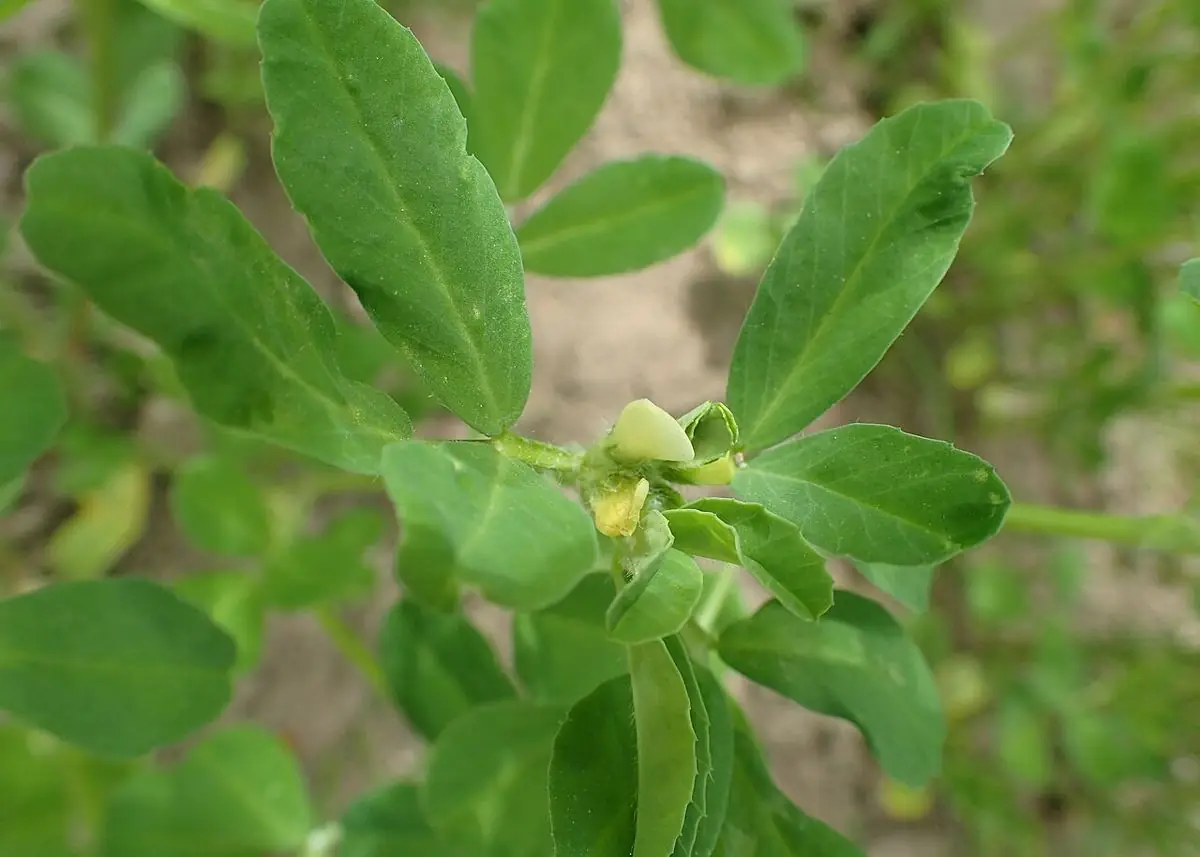
Fenugreek is one of the oldest cultivated plants, grown from the Mediterranean to India for its seeds and its leaves. The hard, square seeds are bitter raw but toast into a nutty, maple-scented spice for curries and pickles; the leaves, fresh or dried, are cooked as methi. Rajasthan grows most of India’s crop.
Traditional profile
Actions
- demulcentCoats and soothes irritated tissue with slippery mucilage.
- carminativeEases gas, bloating, and colic.
- galactagogueTraditionally believed to increase breast milk.
- emollientSoftens and soothes the skin.
Body systems
Chinese medicine
- Name
- 胡芦巴 Hú lú bā
- Nature
- Warm
- Flavor
- Bitter
- Channels
- Kidney, Liver
- Five phases
- Fire by flavor
Ayurveda
- Name
- Methi
- Taste
- Bitter
- Potency
- Heating
- After digestion
- Pungent
- Doshas
- Reduces Kapha and Vata
How to know it
An upright annual one to two feet tall with clover-like leaves of three oval leaflets, small white or pale yellow pea flowers, and long, slender, curved pods holding 10 to 20 hard, golden-brown seeds. The dried herb and seeds smell strongly of maple or curry.
History & lore
Charred fenugreek seeds have been found in Iraq dated to about 4000 BCE, and seeds were found in Tutankhamun’s tomb. The name comes from the Latin faenum Graecum, “Greek hay,” because the Romans grew it as fodder.
It is essential in Indian, Ethiopian, Yemeni, and Persian cooking. In Yemen, whipped fenugreek (hilbeh) is a daily condiment, and in India the seeds are a standard postpartum food.
Growing it
Sow directly in spring or fall in sun and ordinary soil; it grows fast and cool weather suits it best. Cut leaves as microgreens in two weeks or as greens in a month, or let plants set pods for seed. It fixes nitrogen and makes a good cover crop.
Varieties & companions
Most seed is sold simply as fenugreek or methi; Indian varieties are bred for leaf or seed. Grow it with cilantro and mustard greens for a quick Indian greens bed.
Gathering & drying
Cut leaves before flowering for fresh or dried methi (kasuri methi). Pull whole plants when the pods turn yellow-brown, dry them, and thresh out the seeds.
At the hearth
Soaked seeds were eaten or drunk as water for digestion, and a paste of ground seeds was used as a warm poultice for boils and sore skin. Nursing mothers in many cultures have taken fenugreek to encourage milk.
In the kitchen
Toast seeds lightly in hot oil until golden (not dark, or they turn very bitter) at the start of dals, pickles, and curries; they are one of the five seeds of Bengali panch phoron. Cook fresh leaves with potatoes as aloo methi, and rub dried leaves over butter chicken at the end.
Traditional usage
Seeds as spice, sprouts, tea, and poultice; leaves as a vegetable. In Ayurveda fenugreek is used for poor digestion, loss of appetite, fever, and diabetes. In Chinese medicine the seed is a warming tonic for cold and pain in the lower body.
Ayurveda (methi): bitter taste, heating potency, pungent post-digestive effect; reduces Kapha and Vata. Chinese medicine (hú lú bā): bitter, warm, entering the Kidney and Liver channels.
Chemical constituents
The seeds are about half fiber, much of it a gummy galactomannan that swells in water. They contain the alkaloid trigonelline, steroidal saponins such as diosgenin, the unusual amino acid 4-hydroxyisoleucine, and protein. The maple smell comes from sotolon, which is also used to fake maple flavor.
What the research says
NCCIH says fenugreek may help lower blood sugar in type 2 diabetes but many studies were of low quality, and results for increasing breast milk and for menstrual cramps are mixed. European regulators list the seed as a traditional herbal medicine for loss of appetite and, applied to the skin, for minor skin inflammation.
Fenugreek is not safe in pregnancy in more than food amounts; it has been linked to birth defects and can stimulate the uterus. It can cause diarrhea and gas, can lower blood sugar, and can cause allergic reactions, especially in people allergic to peanuts, chickpeas, or soy.
Good to know
After eating a lot of fenugreek, your sweat and urine may smell like maple syrup. It is harmless, but it can confuse doctors testing a baby for maple syrup urine disease if a nursing mother takes it.
Further reading
- NCCIH: FenugreekResearch and safety summary, updated 2025.
- European Medicines Agency: Fenugreek seed herbal summaryWhat European regulators accept, and on what evidence.
- The Ayurvedic Pharmacopoeia of India, Part I, Vol. 2Government of India monographs: taste, potency, and actions.
- Me & Qi: Hu Lu Ba (fenugreek seed)Chinese medicine properties: nature, flavor, channels.