Epazote
Dysphania ambrosioides
A pungent, love-it-or-hate-it weed that belongs in every pot of Mexican black beans.
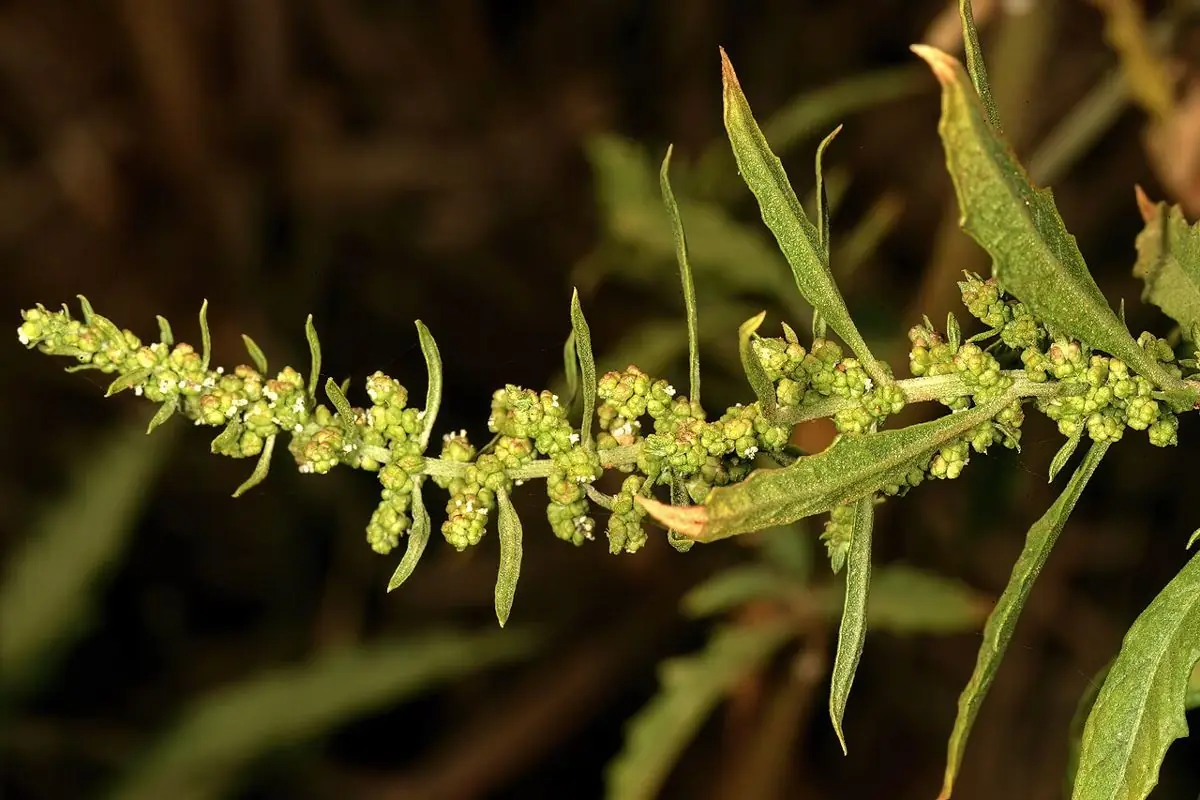
Epazote smells like nothing else: a mix of mint, citrus, turpentine, and gasoline. Mexican cooks have put it in beans for centuries, both for flavor and because it is said to take away the gas beans bring. Its name comes from Nahuatl, and it grows as a weed in waste ground from the Americas around the world.
Traditional profile
Actions
- carminativeEases gas, bloating, and colic.
- anthelminticUsed to expel intestinal worms.
- aromaticRich in fragrant oils, which tend to settle the stomach and clear the head.
Body systems
How to know it
A branching annual or short-lived perennial, one to three feet tall, with lance-shaped, coarsely toothed leaves and long spikes of tiny green flowers packed along the upper stems. Rub a leaf and the smell is unmistakable and strong.
History & lore
The name comes from the Nahuatl epazōtl, usually explained as “skunk sweat.” Other names include wormseed, Mexican tea, and Jesuit’s tea, the last because Jesuit missionaries carried it to Europe.
Oil distilled from its seeds, called oil of chenopodium, was a standard treatment for intestinal worms in the early 1900s until safer drugs replaced it, because the dose that killed worms was dangerously close to one that could harm people.
Growing it
Grow it once and you’ll have it forever: it self-seeds freely in sun and poor soil. Sow in spring after frost. Pinch the flower spikes if you want more leaves and fewer seeds.
Varieties & companions
Most epazote is unnamed, but seed companies sell a milder “Oaxacan” type. Keep it at the edge of a bed, away from tidy plantings, since it reseeds everywhere.
Gathering & drying
Pick leaves and tender tops before flowering. Epazote is much better fresh than dried; freeze leaves if you want to keep them.
At the hearth
A light leaf tea was a Mexican household remedy for a stomachache and gas. It was also used in folk remedies against worms, a use now given up because of the plant’s toxicity.
In the kitchen
Add a sprig or two to a pot of black beans for the last half hour of cooking. Chop a few leaves into quesadillas with squash blossoms, into mushroom dishes, salsas, and tamales. A little goes a long way.
Traditional usage
Leaves as seasoning and a mild tea for digestion; seeds and oil once used against intestinal worms.
Chemical constituents
The strong scent comes from an oil rich in ascaridole, along with p-cymene, α-terpinene, and limonene. Ascaridole is the toxic compound; plants from Mexico usually have less of it than plants grown in Europe or Asia.
What the research says
There is little human research on epazote as food. Its oil kills intestinal worms, but its toxicity led doctors to abandon it. A 2025 review of lab studies found the oil strongly antimicrobial.
A sprig in a pot of beans is safe. Concentrated oil is poisonous and has caused deaths; large amounts of the herb or strong teas should be avoided, especially in pregnancy and by children.
Good to know
Wear gloves if your skin is sensitive; the crushed plant can irritate. Never use epazote oil at home.
Further reading
- Wikipedia: Dysphania ambrosioidesNames, culinary use, and toxicity, with references.
- Review: Essential oils and extracts from epazote (2025)Open-access review of epazote chemistry.