Chiltepin
Capsicum annuum var. glabriusculum
The wild “mother of all peppers,” a tiny red berry that grows under mesquite in Southern Arizona.
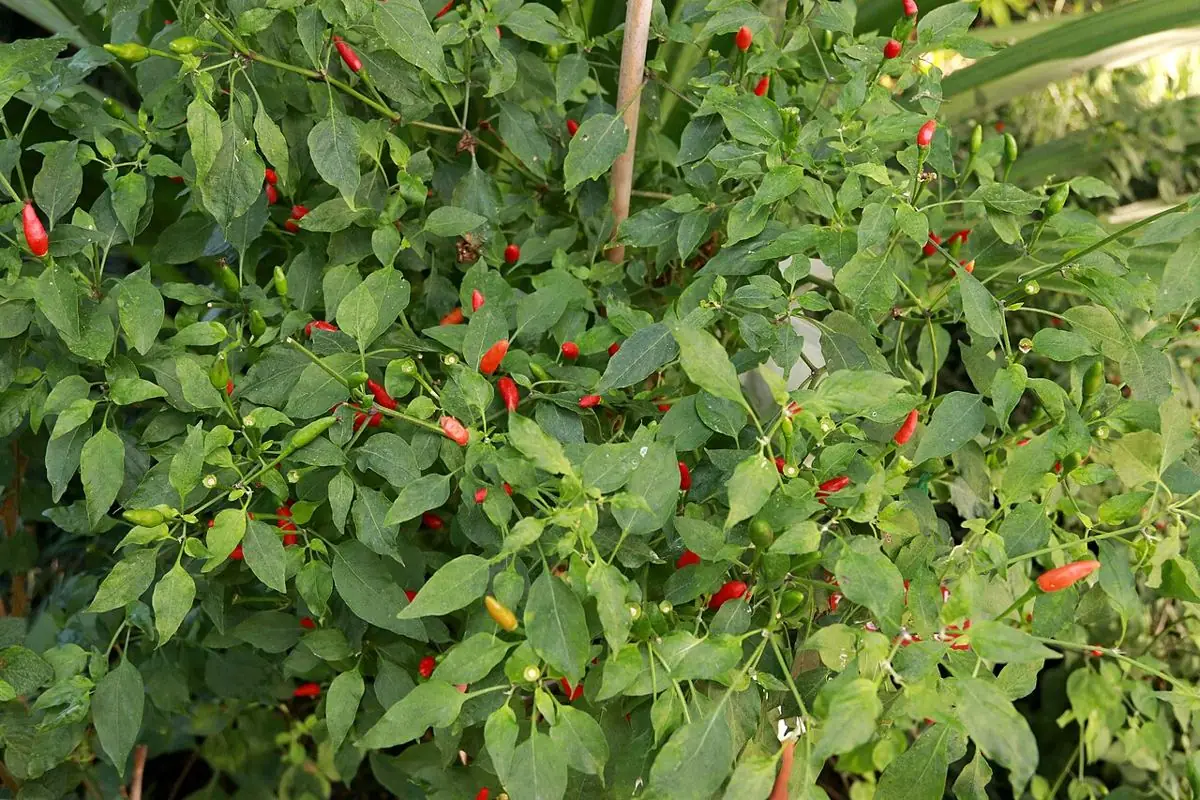
Chiltepin is the wild ancestor of the jalapeño, the bell pepper, and nearly every other chile. It grows as a shrub in the shade of mesquite and hackberry from southern Arizona into Mexico, and birds, which feel no heat, spread its seeds. Its pea-sized red fruits are fiercely hot but the heat fades fast, and Sonoran families still gather them by hand each fall.
Traditional profile
Actions
- stimulantQuickens and warms the circulation or digestion.
- rubefacientWarms and reddens the skin by drawing blood to it.
- carminativeEases gas, bloating, and colic.
- diaphoreticBrings on a sweat; used at the start of a cold or fever.
Body systems
Folk classification
Mexican household medicine: a hot (caliente) food
How to know it
A branching perennial shrub two to four feet tall, sometimes taller in shade, with small oval leaves and white star-shaped flowers. The fruits are round, about the size of a pea, green ripening to bright red, and point upward on the branches.
Other wild “bird peppers” are similar, but chiltepin’s round fruit and shrubby habit under desert trees make it easy to know in Arizona.
History & lore
People have eaten wild chiles for thousands of years, and domestication began in east-central Mexico. In 1999 Native Seeds/SEARCH and the U.S. Forest Service set aside the 2,500-acre Wild Chile Botanical Area in the Coronado National Forest near Tumacácori, west of Sierra Vista, to protect wild chiltepins. Texas named it the state’s official native pepper in 1997.
In Sonora, professional pickers called chiltepineros camp out for weeks each September and October, and a good harvest is a major source of family income.
Growing it
Seed is slow and erratic to sprout; soaking it or scarifying the coat helps. Plant in bright shade, as it grows in the wild under a nurse tree, with regular summer water. The shrub freezes back in hard winters but usually regrows from the base, and it can live for decades.
Varieties & companions
Native Seeds/SEARCH keeps named regional strains such as ‘Sonoran Chiltepin’ and ‘Del Rio Chiltepin.’ Chile pequín and other bird peppers are close relatives.
Plant it on the north or east side of a mesquite, hackberry, or desert willow, where it gets morning sun and afternoon shade.
Gathering & drying
Pick red fruits as they ripen; green ones are used fresh or pickled. They dry easily on a screen in the shade and keep for years. Wear gloves and don’t touch your eyes.
At the hearth
Crushed chiltepin in hot water or broth was a traditional remedy for colds and a stuffy head, and a little in warm oil was rubbed on sore muscles.
In the kitchen
Crush one or two dried chiltepines between your fingers over beans, eggs, soup, or caldo de queso. Green ones are pickled in vinegar with garlic and oregano. The heat is intense but short.
Traditional usage
Fruit as food, seasoning, and pickle; crushed fruit in hot drinks for colds and in rubs for aching joints.
In Mexican household medicine, chile is thought of as a hot (caliente) food that warms and clears congestion.
Chemical constituents
The heat comes from capsaicin and dihydrocapsaicin, concentrated in the white ribs inside the fruit. Chiltepin measures roughly 50,000 to 100,000 Scoville units or more. The fruits are also rich in vitamin C and carotenoid pigments such as capsanthin, which makes them red.
What the research says
There is no research on chiltepin specifically, but capsaicin is well studied. Capsaicin skin creams and patches are approved treatments for some nerve and joint pain; they work by first stimulating and then quieting pain-sensing nerves.
Eaten in food, chile is safe for most people but can worsen heartburn and hemorrhoids.
Good to know
Capsaicin clings to skin. If you burn your hands or mouth, oil, milk, or yogurt helps more than water.
Further reading
- Native Seeds/SEARCH: Sonoran chiltepinHistory, harvest, and growing.
- Wikipedia: Capsicum annuum var. glabriusculumRange, names, and the Wild Chile Botanical Area.