Dang Gui
Angelica sinensis
The fragrant root Chinese kitchens simmer into winter soups, known in the West as dong quai.
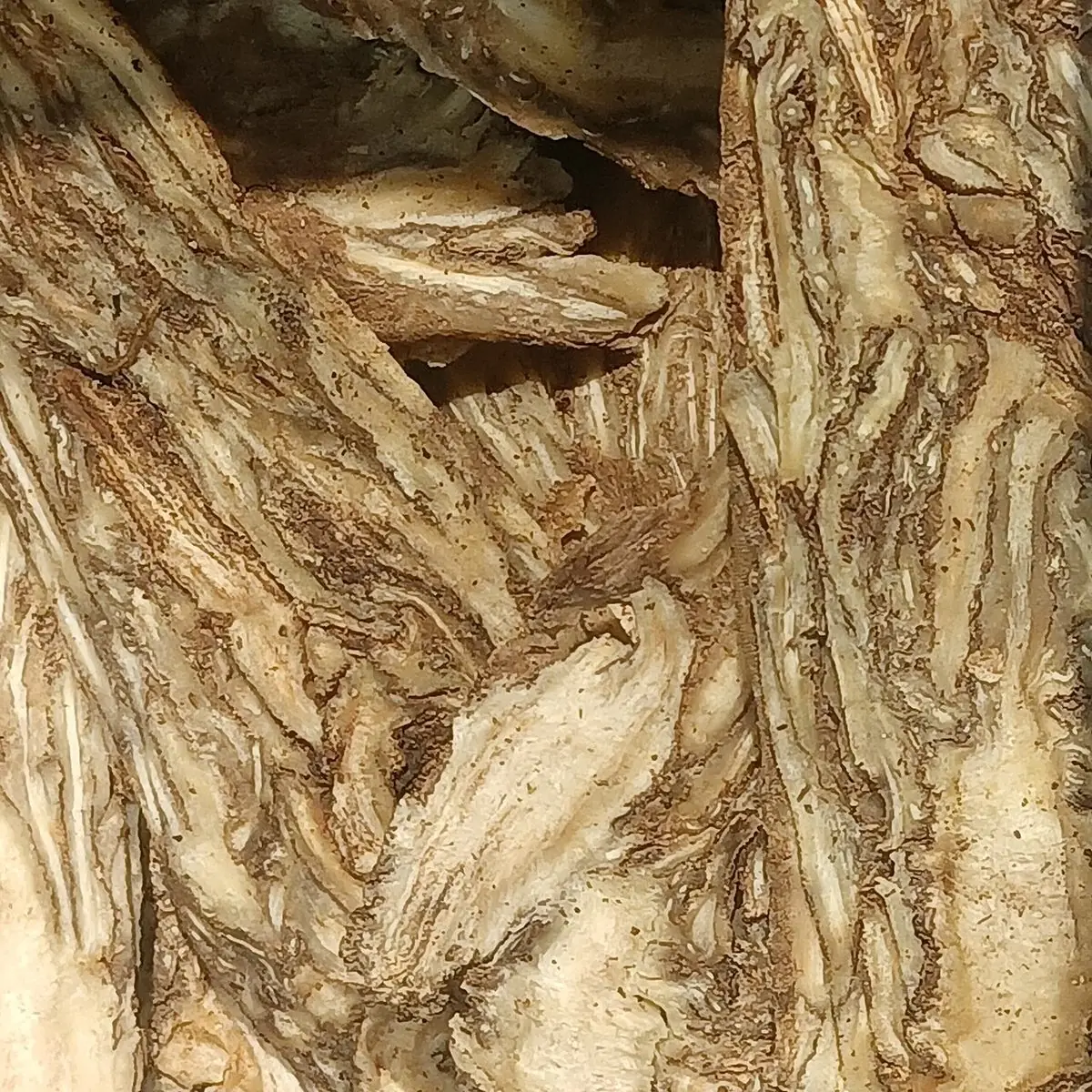
Dang gui is one of the most used roots in Chinese medicine and a familiar sight in Chinese soup pots, sliced thin and simmered with chicken or lamb. Its name, “ought to return,” is explained in a few ways, from a wife waiting for her husband to come home to the idea of sending the blood back where it belongs. In the West it is sold as dong quai and was once marketed as “female ginseng.”
Traditional profile
Actions
- tonicStrengthens and restores when taken over time.
- analgesicEases pain.
- antispasmodicRelaxes cramping muscle, as in the gut or womb.
- aromaticRich in fragrant oils, which tend to settle the stomach and clear the head.
Body systems
Chinese medicine
- Name
- 当归 Dāng guī
- Nature
- Warm
- Flavor
- Sweet, acrid
- Channels
- Liver, Heart, Spleen
- Five phases
- Earth, Metal by flavor
How to know it
A perennial of the carrot family two to three feet tall, with a purplish, ribbed stem, large divided leaves, and flat umbrellas of small white flowers in its third summer. The root is thick and branching, brown outside and pale yellow-white inside, with a strong sweet, celery-like smell.
Dried dang gui is sold as whole roots or as thin, oval slices with a creamy cut face and a dark rim. Good slices are moist, oily, and fragrant; dry, odorless, or greenish slices are old.
History & lore
Dang gui is listed in the Shennong Bencao Jing, the oldest surviving Chinese materia medica, and appears in a large share of classical formulas. The Four Substance decoction (sì wù tāng) of dang gui, rehmannia, white peony, and Sichuan lovage first appears in a Tang dynasty book on treating injuries and fractures, and is still the best-known blood tonic in Chinese medicine.
Herbalists split the root into parts: the head and body were said to nourish the blood, the fine tail roots to move it. Zhang Zhongjing’s second-century Jingui Yaolue gives a dang gui, ginger, and lamb soup for women after childbirth, and versions of it are still cooked in northern China in winter.
Growing it
Dang gui wants cool summers, rich moist soil, and some shade; most of the world’s supply comes from high, cool valleys in Gansu Province. It struggles in hot, dry summers, so in the desert Southwest it needs afternoon shade, steady water, and a cool season. Start from fresh seed in fall or early spring.
Varieties & companions
Several angelicas are used in the same way in their own countries: Japanese Angelica acutiloba (tōki), Korean A. gigas, and European garden angelica (A. archangelica), which is used differently in the West. They are not interchangeable in Chinese medicine.
In the kitchen and the formula it is paired most often with astragalus, rehmannia, and ginger.
Gathering & drying
Roots are dug in late autumn of the second year, before the plant flowers, since flowering makes the root woody. They are washed, left to wilt, tied in bundles, and traditionally dried slowly over low, smoky fires before slicing.
At the hearth
A few slices go into a pot of chicken or lamb broth in the cold months. Old households kept a jar of slices in the pantry the way Western ones kept bay leaves.
In the kitchen
Use two or three slices (about 5 to 10 grams) in a large pot of soup, simmered at least an hour. The flavor is strong, bittersweet, and musky, so a little goes a long way; it is usually balanced with sweet red dates, goji, and ginger. See the <a href="/recipes#recipe-astragalus-dang-gui-chicken-soup">astragalus and dang gui chicken soup</a>.
Traditional usage
Root as decoction, soup, powder, and wine. In Chinese medicine dang gui is the chief herb for “nourishing the blood”: for pallor, dizziness, and fatigue after blood loss or childbirth, for irregular or painful periods, and for dry constipation. It also moves the blood, so it appears in formulas for bruises and pain.
The martial-arts formulas recorded in Walker and Bauer’s The Ancient Art of Life and Death (2002) use it in both directions: in bruise liniments and in the Eight Treasure decoction (bā zhēn tāng) given for recovery after injury.
Chinese medicine: sweet and acrid, warm, entering the Liver, Heart, and Spleen channels; a blood tonic.
Chemical constituents
The aroma comes from an essential oil rich in ligustilide and butylidenephthalide. The root also contains ferulic acid, polysaccharides, and small amounts of coumarins, which may explain reports of skin becoming more sensitive to sunlight.
What the research says
Memorial Sloan Kettering’s review finds the evidence for dang gui’s best-known modern use, easing menopausal symptoms, inconclusive, and a trial in men found it did not help hot flashes. European regulators assessed the root and did not adopt a monograph for it.
Dang gui can increase bleeding with warfarin and other blood thinners, may interact with other medicines, and can make skin sensitive to sun. It is avoided in pregnancy and while breastfeeding, and by people with hormone-sensitive cancers. Check with a doctor before using it as more than a soup ingredient.
Good to know
Never gather wild plants that look like dang gui. The carrot family includes poison hemlock and water hemlock, among the deadliest plants in North America.
Further reading
- Memorial Sloan Kettering: Dong QuaiEvidence, side effects, and drug interactions.
- European Medicines Agency: Angelica sinensis rootEuropean regulators’ assessment (no monograph adopted).
- Me & Qi: Dang GuiChinese medicine properties and uses.