Ashwagandha
Withania somnifera
The “smell of a horse” root of Ayurveda, prized as a restorative tonic for three thousand years.
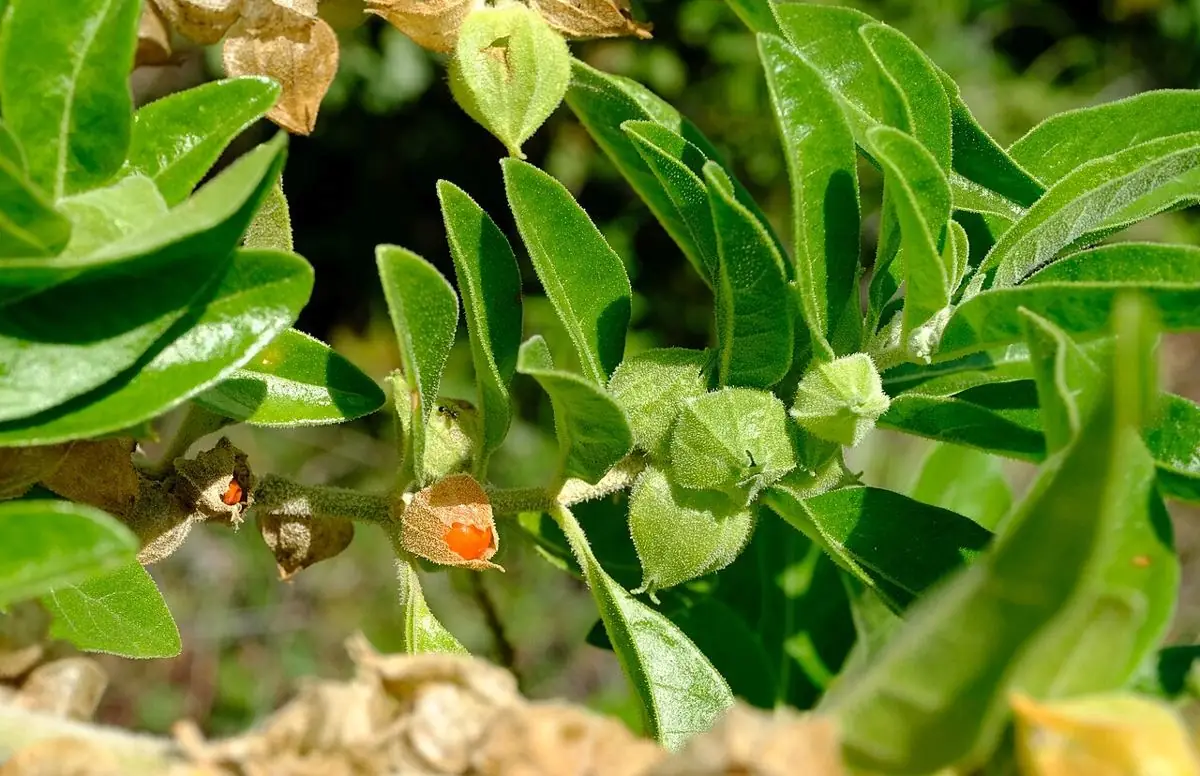
Ashwagandha is a small, drought-tolerant shrub in the tomato family, native from North Africa to India. Its name means “smell of a horse” for the odor of the fresh root, and also for the strength it was believed to give. In Ayurveda it is a rasayana, a rejuvenating tonic for weakness, stress, and poor sleep, and today it is one of the most popular herbal supplements in the world.
Traditional profile
Actions
- adaptogenSaid to help the body cope with stress and return to balance. A modern term, not an old one.
- nervineActs on the nerves: relaxing nervines calm, tonic nervines restore.
- tonicStrengthens and restores when taken over time.
- anti-inflammatoryUsed to calm swelling, redness, and heat in tissues.
Body systems
Ayurveda
- Name
- Ashvagandha
- Taste
- Bitter, astringent
- Potency
- Heating
- After digestion
- Sweet
- Doshas
- Reduces Vata and Kapha
How to know it
A branching, gray-green, velvety shrub two to four feet tall with oval leaves, small greenish-yellow flowers, and papery, lantern-like husks that enclose bright orange-red berries, much like a tomatillo or ground cherry. The roots are long, pale, and fleshy.
History & lore
Ashwagandha has been part of Ayurveda for thousands of years and appears in its classical texts among the rasayana herbs used to restore strength and long life. Its species name, somnifera, means “sleep-bringing,” and it is sometimes called Indian ginseng or winter cherry.
In recent years it has become a global supplement, which has led to questions about safety; in 2023 Denmark moved to ban ashwagandha supplements, a decision other countries have not followed.
Growing it
It does well in hot, dry climates like southern Arizona: sow seed indoors in spring, then plant out in full sun and sandy, well-drained soil with modest water. It is grown as an annual where winters freeze. Roots are ready after about six months.
Varieties & companions
Most seed is unnamed; ‘Jawahar’ and ‘Poshita’ are Indian cultivars bred for root yield. Grow it with other sun-loving, dry-soil herbs such as holy basil and lemongrass.
Gathering & drying
Dig roots in fall once the berries ripen, wash them, cut them into short pieces, and dry them thoroughly. The berries and leaves are not used as food.
At the hearth
The traditional preparation is root powder warmed in milk with a little honey or ghee, taken at bedtime.
In the kitchen
Ashwagandha isn’t a kitchen herb; its taste is bitter and earthy. A close relative, W. coagulans, is called the Indian cheesemaker because its berries curdle milk.
Traditional usage
Root as powder in milk, decoction, and medicated oil. In Ayurveda it is used for weakness and exhaustion, wasting, nervous conditions, joint pain, and infertility, and as a general tonic.
Ayurveda (ashvagandha): bitter and astringent taste, heating potency, sweet post-digestive effect; reduces Vata and Kapha; a rasayana (rejuvenative).
Chemical constituents
The root contains withanolides, a family of steroidal lactones that includes withaferin A and withanolide A, along with alkaloids and saponins. Different products contain very different amounts and include different plant parts, which makes studies hard to compare.
What the research says
NCCIH says ashwagandha may help with sleep and stress, that its effect on anxiety is unclear, and that there isn’t enough evidence for other uses. Most trials are short and many are funded by supplement makers.
It may be safe for up to about three months. It can cause drowsiness and stomach upset, and rare cases of liver injury have been reported. It should be avoided in pregnancy and while breastfeeding, before surgery, and by people with autoimmune or thyroid conditions, and it can interact with sedatives, thyroid, diabetes, blood pressure, and immune-suppressing drugs.
Good to know
Ashwagandha is a nightshade, so people who react to tomatoes, peppers, or potatoes may react to it.
Further reading
- NCCIH: AshwagandhaResearch and safety summary, updated 2023.
- The Ayurvedic Pharmacopoeia of India, Part I, Vol. 1Government of India monographs: taste, potency, and actions.