Chrysanthemum
Chrysanthemum morifolium
Small golden autumn flowers steeped into the clear, honey-scented tea of Chinese teahouses.
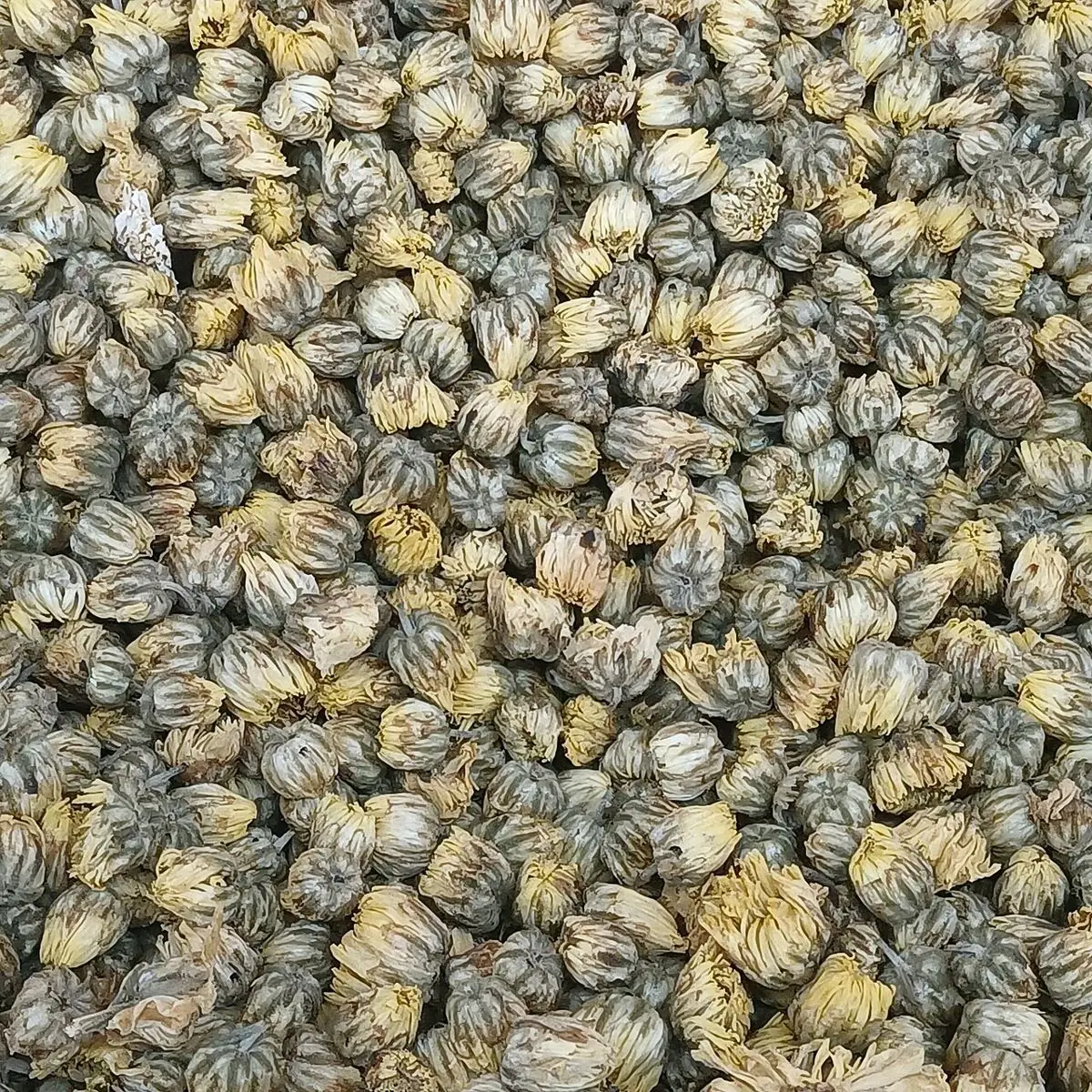
Chrysanthemums were cultivated in China for more than two thousand years before they became a florist’s flower. The small yellow and white tea kinds are dried whole and steeped until they unfurl in the cup, often with a few goji berries. In Japan the chrysanthemum became the emblem of the imperial family.
Traditional profile
Actions
- refrigerantCooling; lowers heat and quenches thirst.
- anti-inflammatoryUsed to calm swelling, redness, and heat in tissues.
- nervineActs on the nerves: relaxing nervines calm, tonic nervines restore.
Body systems
Chinese medicine
- Name
- 菊花 Jú huā
- Nature
- Slightly cool
- Flavor
- Sweet, bitter
- Channels
- Lung, Liver
- Five phases
- Earth, Fire by flavor
How to know it
A bushy perennial one to three feet tall with lobed, gray-green, aromatic leaves and many flower heads in fall. Tea chrysanthemums are small and simple, with white or yellow petals around a yellow center; ornamental types come in every shape and color.
Tea chrysanthemum is sold as jú huā; the tiny, very bitter wild chrysanthemum (yě jú huā) is a different herb.
History & lore
Chrysanthemum is listed in the Shennong Bencao Jing, China’s oldest herbal. The poet Tao Yuanming, who retired to a farm in the 400s, made it a symbol of the quiet scholar’s life, and on the Double Ninth Festival (the ninth day of the ninth lunar month) families climb hills and drink chrysanthemum wine.
The flower reached Japan around the 700s, and a sixteen-petaled chrysanthemum became the imperial crest; the Japanese throne is still called the Chrysanthemum Throne. Chinese medicine groups the flower with herbs that cool and clear the head and eyes.
Growing it
Grow it in sun and rich, well-drained soil, and pinch the tips until midsummer for a bushier plant with more flowers. Chrysanthemums flower as days shorten. Divide clumps every couple of years in spring.
Varieties & companions
Tea types are sold as ‘Hang Bai Ju’ (white, from Hangzhou) and ‘Huang Ju’ (yellow). Snow chrysanthemum (Coreopsis tinctoria) is a different plant sold for tea. Grow tea chrysanthemums near goji for a tea garden.
Gathering & drying
Pick flowers when fully open on a dry day. Dry them whole on screens in the shade; some growers steam them briefly first to keep the color.
At the hearth
A pot of chrysanthemum tea is drunk in hot weather to cool down and in the evening to relax. Cooled tea on a cloth was laid over tired eyes.
In the kitchen
Besides tea, the petals garnish soups and salads. Crown daisy or chrysanthemum greens (shungiku, ssukgat) are a related plant whose leaves are eaten in Japanese and Korean hot pots.
Traditional usage
Flowers as tea, often with goji or mulberry leaf. In Chinese medicine they are used for colds with fever and headache, for red, sore, or dry eyes, and for dizziness from “Liver heat.”
Chinese medicine: sweet and bitter, slightly cool, entering the Lung and Liver channels.
Chemical constituents
The flowers contain flavonoids, especially luteolin and apigenin glycosides, and caffeoylquinic acids such as chlorogenic acid, plus a small amount of essential oil with camphor and borneol.
What the research says
There are very few human studies of chrysanthemum tea. Lab studies show antioxidant and anti-inflammatory activity from its flavonoids.
It is a daisy-family plant, so people allergic to ragweed or chamomile may react to it, and handling the plants can cause skin rashes in sensitive people.
Good to know
Florist chrysanthemums may be sprayed; use flowers grown for tea.
Further reading
- Me & Qi: Ju Hua (chrysanthemum flower)Chinese medicine properties and uses.
- Wikipedia: Chrysanthemum teaTea types and customs.